Heavy Metal Contaminated Soil Washing Remediation: Case Studies and Technical Analysis
Heavy Metal Contaminated Soil Washing Remediation: Case Studies and Technical AnalysisHeavy metal contamination in soil poses one of the most persistent environmental challenges facing industrial sites worldwide. Unlike organic pollutants that can degrade over time, heavy metals such as lead (Pb),
Heavy Metal Contaminated Soil Washing Remediation: Case Studies and Technical Analysis
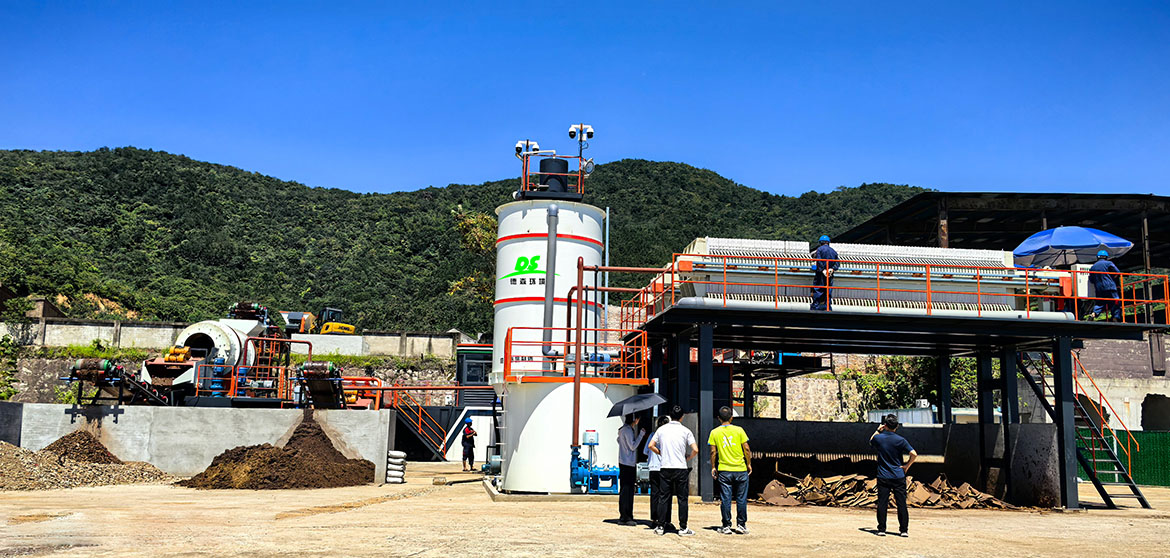
Heavy metal contamination in soil poses one of the most persistent environmental challenges facing industrial sites worldwide. Unlike organic pollutants that can degrade over time, heavy metals such as lead (Pb), arsenic (As), cadmium (Cd), zinc (Zn), and chromium (Cr) accumulate in the food chain and cause long-term harm to human health and ecosystems. Among the available remediation technologies, soil washing has emerged as a highly effective ex-situ method for treating heavy metal contaminated sites—and real-world case data confirms its value at scale.
Why Soil Washing Works for Heavy Metal Contamination
Soil washing is a physical-chemical separation process that exploits differences in particle size, density, and surface properties between contaminated fine particles (typically silt and clay fractions below 0.075 mm) and relatively clean coarse particles (sand and gravel above 0.075 mm). Heavy metals tend to concentrate in the fine fraction due to their high surface area and adsorption capacity. By separating these fractions through hydraulic and mechanical means, soil washing can reduce contaminated soil volume by more than 80%, making disposal far more cost-effective.
The process typically involves:
- Pre-screening and crushing: Removing debris and breaking up soil aggregates
- Attrition scrubbing: Mechanical agitation to detach metals from particle surfaces
- Size classification: Hydrocyclones and screens separating fine from coarse fractions
- Chemical enhancement: Adding chelating agents or acids to improve metal leaching efficiency
- Sludge dewatering: Filter press systems producing stable cake for final disposal
- Water recycling: Closed-loop water treatment reducing fresh water consumption by up to 90%
Real Project Data: Treatment Capacities Across China
Desen Environment has completed dozens of heavy metal soil washing remediation projects across Chinese provinces, with processing capacities ranging from 15 TPH to 100+ TPH. The following case data illustrates typical project parameters and outcomes:
Nanjing Heavy Metal Soil Washing Project — 30 TPH
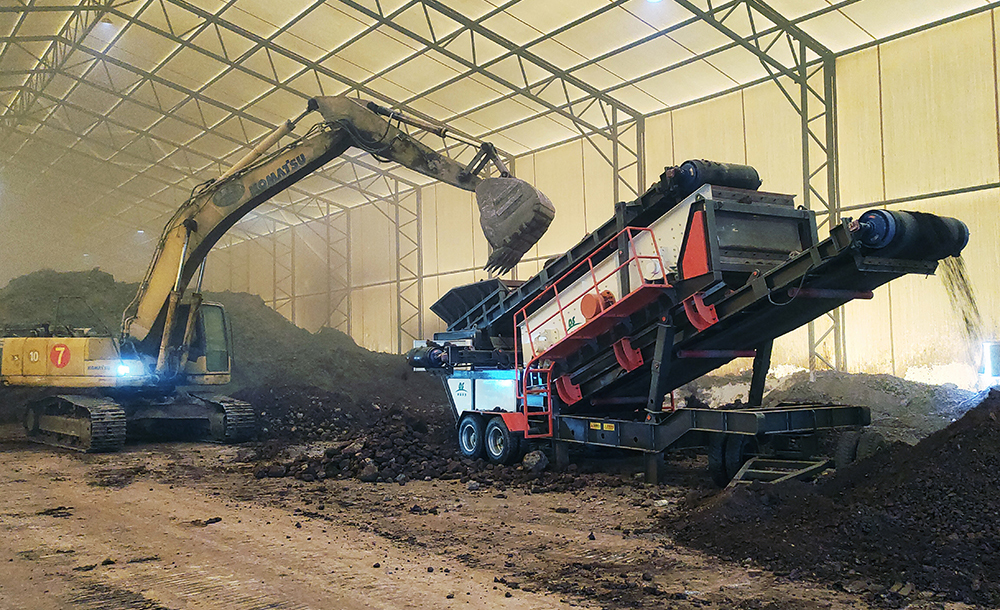
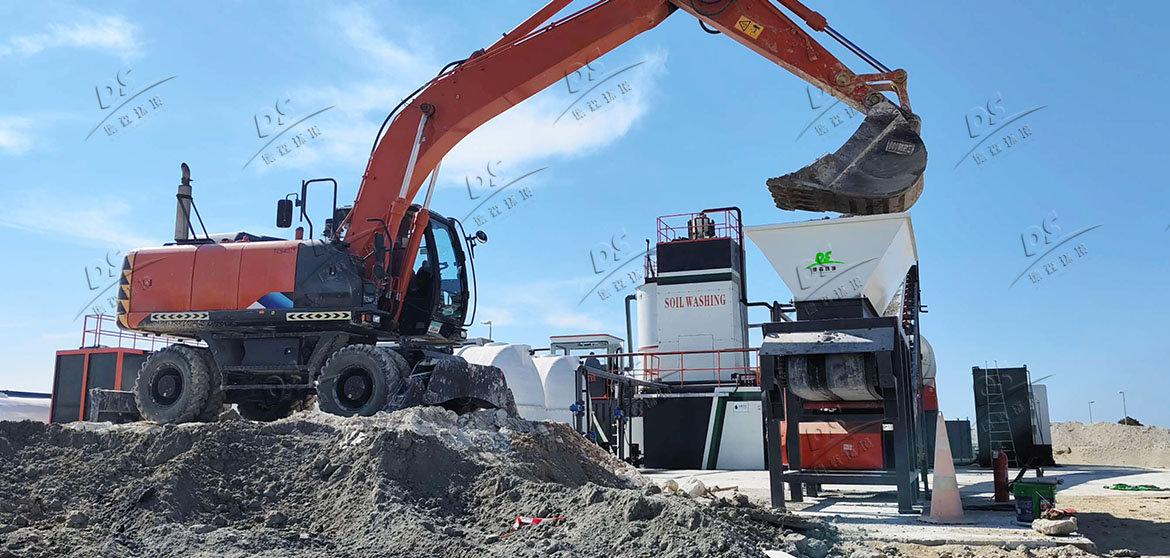
A former industrial site in Nanjing required remediation of soil contaminated with lead and arsenic. Desen mobile washing system was deployed on-site, treating contaminated material at 30 tons per hour. After washing, the coarse fraction met the regulatory threshold for on-site backfill, while the concentrated fine fraction was directed to specialized disposal.
Wenzhou Mobile Heavy Metal Washing Project — 15 TPH
This project targeted lead and arsenic contamination at a chemical facility in Wenzhou, Zhejiang Province. The mobile washing unit was selected for its rapid deployment capability—no permanent foundation was required. Working at 15 TPH, the system successfully reduced contaminant concentrations to below the national remediation target within the project timeline.
Guangzhou Arsenic-Contaminated Soil Remediation — 40–60 TPH
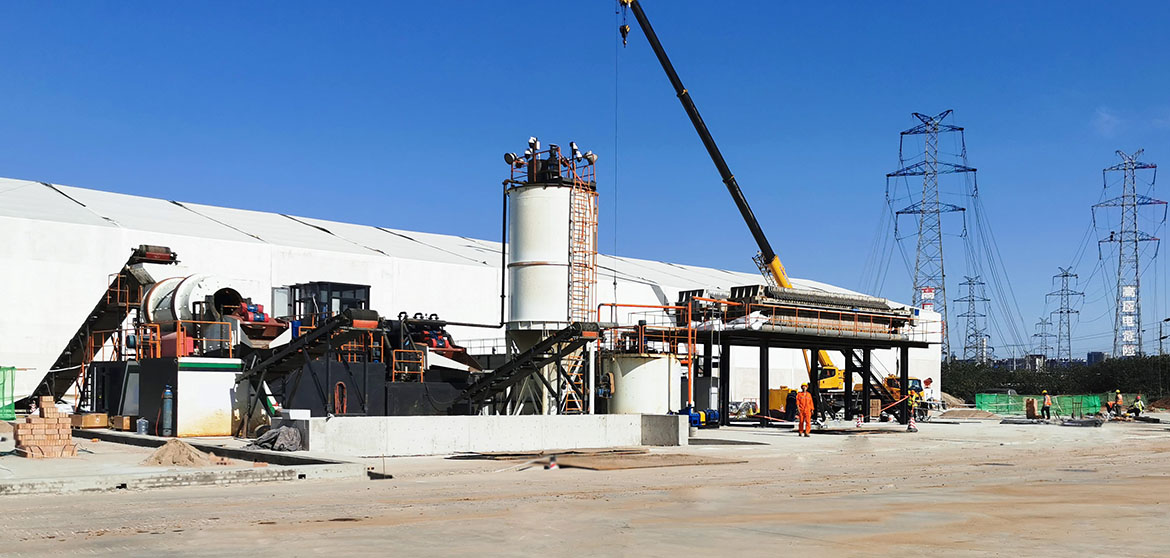
A large-scale remediation effort in Guangzhou addressed soil contaminated with arsenic, mercury, nickel, lead, and other heavy metals. Processing at 40–60 TPH, Desen fixed washing plant achieved significant volume reduction. The cleaned coarse sand fraction was classified and reused as construction material, supporting the circular economy goals of the project.
Jinan Steel Plant Heavy Metal Remediation — 30 TPH
Soil at a former steel manufacturing facility in Jinan was contaminated with lead and arsenic from historical operations. The soil washing system processed material at 30 TPH, recovering clean aggregate for reuse and directing the metal-enriched fine fraction to secure disposal. Water used in the process was treated and recycled on-site.
Technical Advantages of Soil Washing for Heavy Metals
When compared against alternative remediation approaches—such as landfilling, vitrification, or in-situ chemical stabilization—soil washing offers several distinct advantages for heavy metal contaminated sites:
- Volume reduction: 80%+ reduction in contaminated material requiring off-site disposal, dramatically lowering disposal costs
- Material recovery: Clean sand, gravel, and aggregate can be classified and reused on-site or sold as construction material
- Proven at scale: Industrial-scale systems operate reliably at 30–100+ TPH with automated controls
- Chemical-free option: Physical washing alone can achieve significant metal removal for many contamination profiles
- Closed-loop water system: Water treatment and recycling minimize environmental discharge and water consumption
- Remote monitoring: DCS and 5G IoT connectivity enable real-time system monitoring and operational optimization
Choosing the Right System Configuration
Project scale, site conditions, and contamination profile all influence system selection. Desen Environment offers three equipment configurations:
Mobile Washing Units (DSLXC Series): Four-unit trailer-mounted system delivering 15–30 TPH combined capacity. Best for distributed sites, urgent remediation schedules, or projects requiring relocation. Each unit is independently powered and hydraulically stabilized—no civil works required.
Modular Skid-Mounted Plants: Factory-assembled plant units designed for rapid installation on prepared flat surfaces. Capacity from 30–100+ TPH. Ideal for medium-to-large sites with a multi-year remediation horizon.
Fixed Permanent Installations: Purpose-built facilities for high-volume, long-term operations. Best suited for regional treatment centers serving multiple contaminated sites or large-scale industrial remediation programs.
Heavy Metal Removal Efficiency: What the Data Shows
Field results from Desen installed base show consistent heavy metal removal performance across different contamination profiles:
- Lead (Pb): Removal rates typically exceed 75% for coarse-fraction washing applications
- Arsenic (As): Effective removal from sand fractions; fine clay fractions may require supplementary chemical stabilization
- Chromium (Cr6+): Washing followed by chemical reduction achieves target levels for most regulatory standards
- Cadmium (Cd): High solubility in wash solutions enables efficient transfer to liquid phase for treatment
- Zinc (Zn): Readily mobilized in aqueous washing media, supporting high removal rates
For sites with mixed contamination (heavy metals plus organic compounds such as petroleum hydrocarbons or PAHs), Desen combined washing plus biological treatment system addresses both contaminant categories in a single integrated process.
Frequently Asked Questions
Q: Can soil washing completely remove all heavy metals from contaminated soil?
A: Soil washing is most effective at removing metals adsorbed to sand and gravel fractions. For fine-grained soils (high clay content), washing efficiency decreases because metals are more tightly bound. In such cases, washing is typically followed by chemical stabilization for the residual fine fraction. Complete removal is rarely the goal—rather, reduction to regulatory-compliant levels for safe reuse or disposal.
Q: What happens to the contaminated fine fraction after washing?
A: The metal-enriched slurry is dewatered through a filter press, producing a stable sludge cake with significantly reduced volume. This concentrate is classified as hazardous waste and managed according to local regulations—typically through secure landfilling or specialized treatment. The reduction in total waste volume achieved by washing significantly lowers disposal costs compared to landfilling untreated soil.
Q: How much water does a soil washing system consume?
A: With modern closed-loop water recycling systems, fresh water consumption is minimized. Desen washing plants achieve water recovery rates of 85–90%, with treated process water reused in the washing circuit. Makeup water requirements are typically under 10–15% of total process water volume.
Q: How long does a typical heavy metal soil remediation project take?
A: Project duration depends on site size, contamination depth, and required treatment capacity. A mobile washing unit processing at 15–30 TPH can treat 100–500 cubic meters of contaminated soil per day, depending on operating hours. Small-to-medium projects may complete in 3–6 months; large-scale remediation programs typically run 1–3 years.
Q: Is on-site operation safe for workers and surrounding communities?
A: Yes, when properly managed. Desen washing systems are enclosed where possible to control dust and odor. Workers wear standard PPE for contaminated land operations. Air monitoring and perimeter controls are standard practice. The automated DCS controls minimize direct worker contact with contaminated material.
Conclusion
Heavy metal contaminated soil washing remediation is a proven, scalable, and economically rational approach to restoring contaminated industrial sites. With processing capacities from 15 to 100+ TPH, modular and mobile configurations available, and a track record spanning dozens of projects across China and internationally, soil washing technology has matured into a reliable mainstream remediation tool.
Desen Environment supplies complete heavy metal soil washing systems—including crushing, scrubbing, classification, dewatering, and water treatment modules—backed by over a decade of field-proven performance and more than 30 proprietary intellectual property rights. To discuss your site-specific remediation requirements, contact the Desen technical team at desengroups@gmail.com or visit www.materialwashing.com.