Mobile Soil Washing Equipment: A Practical Guide for Heavy Metal Contaminated Site Remediation
Mobile Soil Washing Equipment: A Practical Guide for Heavy Metal Contaminated Site RemediationWhen a heavy metal contaminated site requires remediation, logistics and time are often the biggest obstacles. Traditional fixed washing plants demand months of civil construction, permits, and on-site in
Mobile Soil Washing Equipment: A Practical Guide for Heavy Metal Contaminated Site Remediation
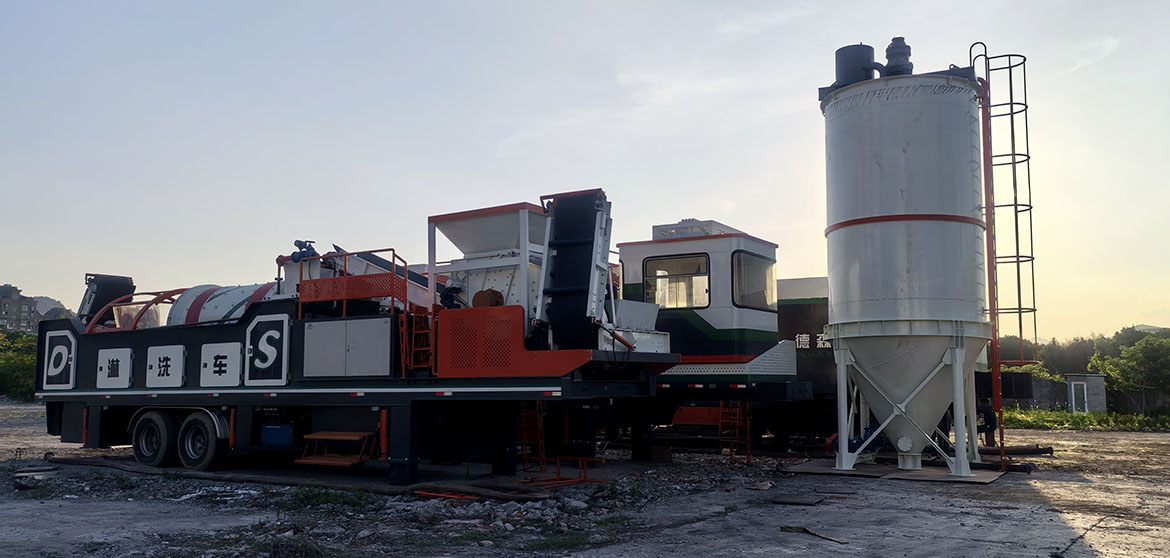
When a heavy metal contaminated site requires remediation, logistics and time are often the biggest obstacles. Traditional fixed washing plants demand months of civil construction, permits, and on-site installation—time that contaminated sites often cannot afford. Mobile soil washing equipment changes this equation entirely. By delivering full-scale treatment capacity on a trailer-mounted platform that can be towed directly to site, mobilized in days, and operated without permanent foundations, mobile units have become the preferred choice for contractors and project owners managing distributed contamination or tight remediation schedules.
How Mobile Soil Washing Equipment Works
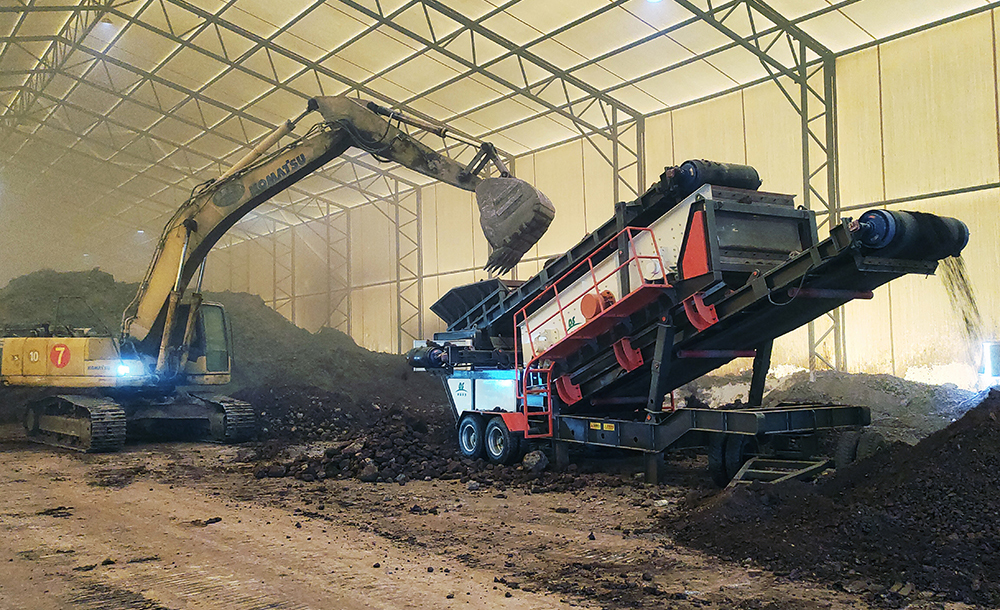
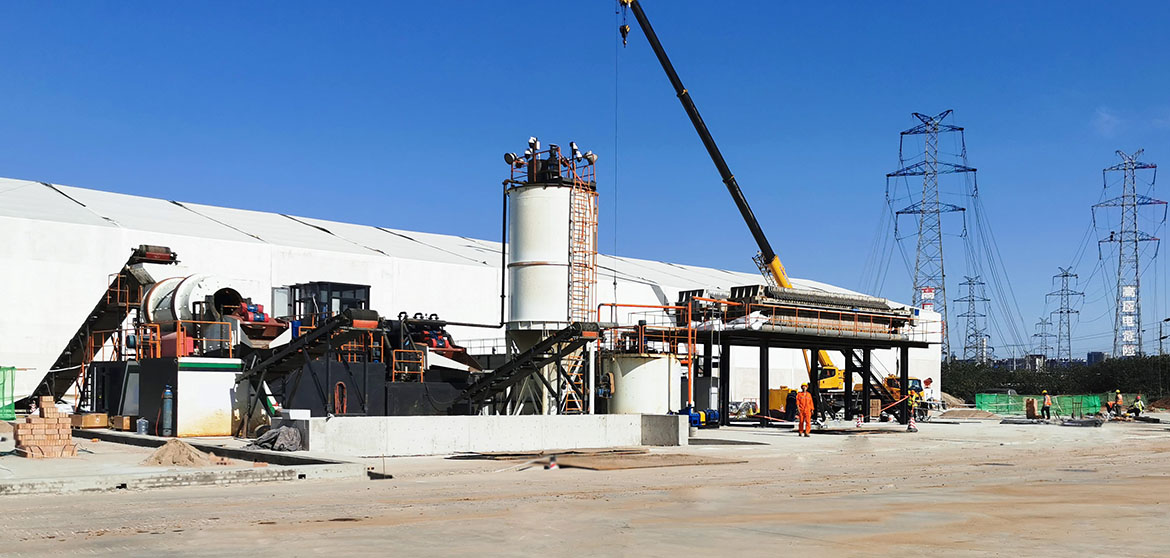
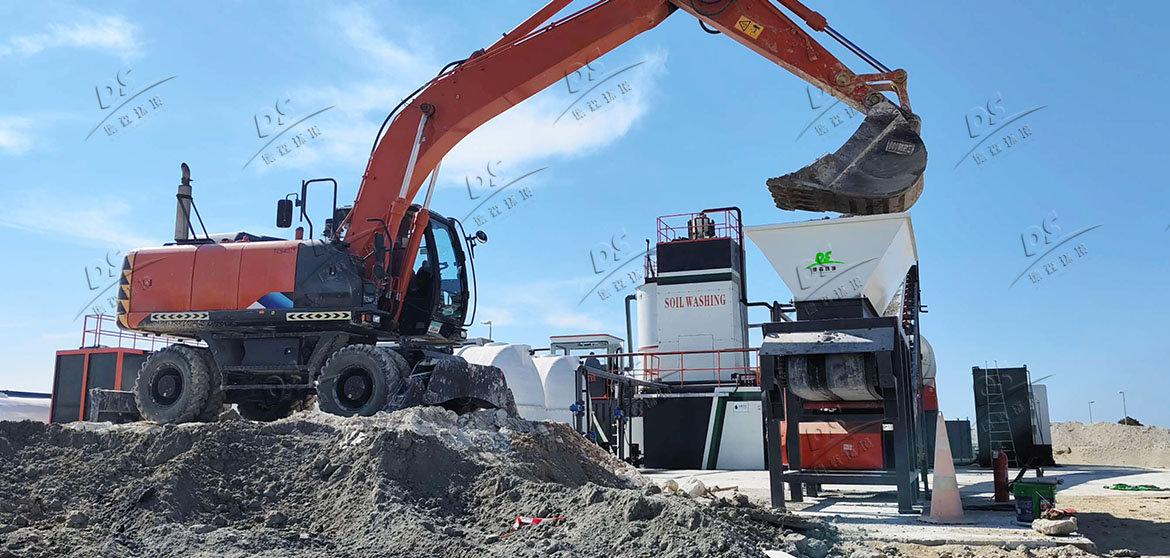
Mobile soil washing systems are designed as integrated treatment lines assembled on wheeled trailers or truck chassis. Each functional unit is self-contained with its own hydraulic stabilization, electrical controls, and drive system. When deployed in combination, multiple mobile units form a complete washing circuit capable of processing contaminated soil from feed through final dewatering.
A standard mobile washing configuration consists of four core modules:
- Module 1 — Attrition Washing Unit: Feeds contaminated soil, performs coarse pre-screening, and mechanically scrubs particles to dislodge surface-adhered heavy metals. Equipped with a rotating drum lined with rubber friction strips for efficient attrition without excessive abrasion.
- Module 2 — Classification and Grading Unit: Processes slurry from the washing unit at up to 30 TPH. Uses spiral classifiers and enhanced drainage screens to separate particle size fractions. Hydrocyclone stages further classify fine materials, concentrating metals into the smallest volume stream.
- Module 3 — Sludge Dewatering Unit: Receives metal-enriched slurry and processes it through a plate-and-frame filter press. Produces a stable, dewatered cake with typically under 60% moisture content. The filtrate is discharged for treatment rather than direct discharge.
- Module 4 — Water Treatment Unit: Handles all process effluent from the dewatering and classification stages. Uses inclined tube settlers, chemical dosing (flocculant/coagulant combinations), and reaction modules to remove suspended solids and dissolved metals before recycling water back to the washing circuit.
This four-module configuration processes contaminated soil at 15–30 TPH per module, with the combined water treatment unit capable of handling up to 90 m³ per hour of process effluent.
Key Advantages of Mobile Washing Units for Heavy Metal Sites
Mobile soil washing equipment offers specific advantages for heavy metal remediation projects that fixed installations cannot easily replicate:
- Immediate deployment: Units arrive on site on trailers and are operational within days. No concrete foundations, no structural installation, no months-long lead time. This is critical for projects with regulatory deadlines or fast-track construction schedules.
- Multi-site flexibility: A single mobile washing fleet can service multiple contaminated sites across a region without permanent infrastructure commitment. When one site is complete, the equipment is towed to the next location—a model particularly attractive to remediation contractors managing distributed contamination portfolios.
- Reduced permitting complexity: Mobile units typically qualify as temporary equipment, simplifying environmental and operational permits compared to permanent plant installations in many jurisdictions.
- Full-scale treatment on constrained sites: Modern mobile washing systems deliver treatment capacities comparable to smaller fixed plants (15–30 TPH per module), not the reduced throughput typically associated with portable or temporary equipment.
- Lower capital commitment: For projects with uncertain timelines or phased contamination, mobile units avoid the sunk cost of permanent infrastructure that may not be fully utilized.
- Proven track record in China: Desen Environment mobile washing equipment has been deployed at heavy metal remediation projects across multiple Chinese provinces, including Wenzhou (Pb/As, 15 TPH), Beijing (As), Guangzhou (As/Hg/Pb/Ni, 40–60 TPH), and Jinan (Pb/As, 30 TPH).
Real-World Performance Data from Chinese Remediation Projects
The following project summaries illustrate how mobile washing equipment performs under actual field conditions on heavy metal contaminated sites:
Wenzhou Lead-Arsenic Contaminated Site — 15 TPH
A former chemical facility in Wenzhou, Zhejiang Province was contaminated with lead and arsenic from industrial operations. Desen mobile washing unit was mobilized and began treatment within two weeks of contract award. Operating at 15 TPH, the system processed the site over a period of months, with treated coarse material meeting regulatory thresholds for backfill reuse. The project's rapid mobilization was credited with avoiding regulatory penalties associated with delayed remediation at the site.
Beijing Arsenic-Contaminated Soil Remediation
An arsenic-contaminated site in Beijing required ex-situ remediation before site redevelopment could proceed. Mobile washing equipment was selected to avoid the months-long process of obtaining permits for a fixed installation in an urban environment. The unit was deployed, operated through the treatment phase, and redeployed to a subsequent project site upon completion—demonstrating the multi-project utilization model that makes mobile equipment economically attractive for remediation contractors.
Guangzhou Multi-Metal Contaminated Soil — 40–60 TPH
A large-scale remediation project in Guangzhou addressed soil contaminated with arsenic, mercury, nickel, lead, and cadmium from historical industrial activity. The combined mobile washing configuration achieved throughput of 40–60 TPH, substantially reducing the project timeline compared to estimates for conventional excavation-and-disposal approaches. Clean aggregate recovered from the washing process was classified and reused on-site as construction fill, recovering material value from the remediation process.
System Specifications: What to Look for in Mobile Washing Equipment
When evaluating mobile soil washing equipment for a heavy metal remediation project, the following specifications are most relevant to project planning and performance assurance:
- Processing capacity: Per-module throughput (TPH) and combined system throughput for multi-module configurations
- Particle size range handled: Maximum feed size and effective treatment range (most systems handle 0–50 mm feeds effectively)
- Power configuration: Self-contained diesel-hydraulic drive vs. grid connection requirements
- Water consumption and recycling rate: Closed-loop systems with 85–90% water recovery minimize fresh water demand and discharge
- Control system: Automated DCS controls with data logging for regulatory compliance documentation; remote monitoring capability (5G/IoT) for multi-site operations
- Sludge dewatering performance: Filter press capacity, cake moisture content, and filtrate quality for downstream water treatment
- Mobility and setup time: Towing requirements, hydraulic outrigger setup time, and commissioning period on new site
- Chemical compatibility: Material selection for corrosion resistance when treating acidic or high-TDS contaminated materials
Applications Beyond Heavy Metals: What Mobile Washing Can Handle
While this article focuses on heavy metal contaminated sites, mobile soil washing equipment is equally effective for other contamination types commonly encountered at industrial and former industrial sites:
- Petroleum hydrocarbon contamination: Oil-contaminated soil from fuel storage, pipeline leaks, and industrial spills responds well to attrition washing followed by classification and dewatering
- PAH and SVOC contamination: Polycyclic aromatic hydrocarbons and semi-volatile organic compounds concentrate in the fine fraction and are efficiently separated through washing circuits
- Mixed contamination: Sites with both heavy metals and organic contaminants can often be addressed through a combined washing plus biological treatment sequence
- Dredged sediments and sludges: Canal sediments, river dredgings, and industrial sludge with high moisture content are effectively dewatered and classified
- Drilling cuttings and drilling mud: Oilfield waste with high oil and solids content processed through washing and thermal treatment
Frequently Asked Questions
Q: How quickly can a mobile soil washing unit be operational on a new site?
A: From arrival on-site to first material processed, a well-prepared mobile washing unit typically requires 3–7 days for positioning, hydraulic stabilization, electrical connection, and commissioning. This is substantially faster than fixed plant installation, which commonly requires 3–6 months for civil works and installation.
Q: What is the typical lifespan and maintenance interval for mobile washing equipment?
A: Industrial mobile washing equipment is designed for multi-year field operation with regular maintenance schedules. Key wearing parts—screen panels, friction liners, pump impellers, and filter cloths—are inspected and replaced on planned maintenance intervals. Desen systems include remote monitoring through 5G IoT connectivity, enabling predictive maintenance and minimizing unplanned downtime.
Q: Can mobile washing equipment handle clay-rich soils with high heavy metal concentrations?
A: Clay-rich soils present the greatest challenge for physical washing because heavy metals are more strongly bound to fine clay particles. For such soils, physical washing alone may achieve partial removal, and a supplementary chemical stabilization step for the fine fraction is often recommended to meet target thresholds. Soil characterization and bench-scale testing are standard practice before system deployment to confirm washing efficiency estimates.
Q: What regulatory standards must treated soil meet in China?
A: Chinese remediation standards vary by land use category (agricultural, residential, industrial, commercial) and by contaminant. General soil environmental quality standards are defined in GB 15618 (agricultural land) and GB 36600 (construction land). Project-specific remediation targets are established through site risk assessment and approved by local environmental authorities before remediation begins.
Q: Is mobile washing equipment suitable for urban remediation projects with space constraints?
A: Yes—one of the primary advantages of mobile washing equipment is its compact footprint relative to treatment capacity. A four-module mobile washing line occupies approximately 100–150 meters of linear site frontage when fully deployed in sequence. The enclosed design minimizes dust and noise emissions, making it compatible with urban work environments and residential proximity.
Conclusion
Mobile soil washing equipment has matured into a proven, practical solution for heavy metal contaminated site remediation. Its ability to deliver full-scale treatment capacity—15 to 100+ TPH depending on configuration—without permanent infrastructure makes it uniquely suited to the realities of remediation project economics and schedules. From single-site urgent remediation to multi-site remediation programs managed by contractors, mobile washing units provide the flexibility, speed, and performance that contaminated site owners and remediation professionals increasingly demand.
Desen Environment manufactures and supplies the DSLXC series mobile soil washing system, including all four functional modules (attrition washing, classification, dewatering, and water treatment) on trailer-mounted platforms. With 30+ years of equipment manufacturing experience and 10+ years specializing in environmental remediation equipment, Desen supports projects across China and internationally. Contact the technical team at desengroups@gmail.com or visit www.materialwashing.com to discuss your project requirements.