Skid-Mounted vs Fixed Soil Washing Equipment: A Practical Selection Guide
Compare skid-mounted vs fixed soil washing equipment: technical principles, advantages, project cases and selection guidance from Desen Environment.
Skid-Mounted vs Fixed Soil Washing Equipment: A Practical Selection Guide
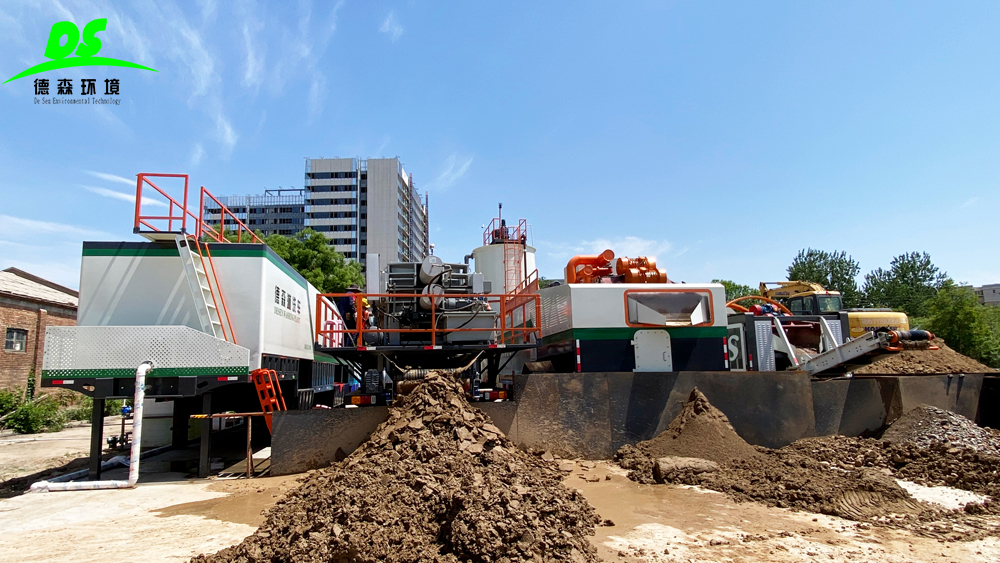
Choosing between skid-mounted and fixed soil washing equipment is rarely a question of which machine is better. It is a question of which configuration fits the site, the schedule and the budget. Both designs have earned their place in remediation practice, yet they answer very different project briefs. This guide walks through the technical differences, the operational trade-offs and the selection logic that actually matters on the ground.
Technical Principles Behind the Two Configurations
A fixed soil washing plant is engineered around a permanent location. Foundations, slurry circuits and settling infrastructure are built once and amortised over years of service, which suits industrial facilities with a steady feed stream and a predictable contamination profile. The skid-mounted soil washing equipment, by contrast, is built as transportable modules. Each module is a complete process unit — attrition scrubber, hydrocyclone cluster, dewatering screen — that can be bolted together on site and dismantled just as quickly when the campaign ends.
What makes the skid design work is process flexibility. The washing chemistry, water balance and screen sizing can be tuned for a specific soil type, and the whole train can be redeployed to the next site without rebuilding civils. That is the core principle: a fixed plant optimises for a known feed, while a skid-mounted plant optimises for unknown terrain.
Key Advantages Compared
When a fixed plant earns its keep
- Long-duration projects with stable feed volumes justify the capital investment.
- Higher throughput ceilings and simpler integration with permanent water treatment.
- Lower unit operating cost once the infrastructure is amortised.
Where skid-mounted equipment wins
- Mobilisation measured in days, not months — critical for tender-driven remediation work.
- No residual foundation cost when the soil volume is a one-off campaign.
- Modular upgrades: add a scrubber or a classification unit without re-engineering the plant.
- Simpler permitting, because the plant footprint is temporary.
Case Notes from the Field
Desen Environment has supplied both configurations across remediation projects in China and overseas. In one European-style tendered project, a skid-mounted soil washing plant handled 60,000 tonnes of mixed contaminated soil over a fixed campaign window, then left the site with the land restored — no demolition, no buried concrete. In contrast, an industrial client running continuous treatment chose a fixed installation to lock in low operating costs over a multi-year programme. The deciding factors were the same in both cases: feed continuity, campaign duration and land-use plan.
Zhengzhou Desen Environmental Technology Co., Ltd. has built its engineering practice around reading those factors honestly before recommending a configuration. More detailed references can be found on materialwashing.com, where both plant types are documented with their process layouts.
FAQ: Skid-Mounted vs Fixed Soil Washing Equipment
Is skid-mounted soil washing equipment cheaper than a fixed plant? The capital cost is comparable per tonne of capacity, but the skid design avoids foundation, demolition and stranded-asset costs, so the all-in project cost is usually lower for campaigns under two years.
Can a skid-mounted plant reach the same treatment performance? Yes. Wash efficiency is driven by attrition, water chemistry and classification, not by whether the frame is bolted to concrete. Skid plants regularly meet the same discharge standards.
How long does mobilisation take? Desen's skid-mounted units can typically be commissioned within one to two weeks of arrival, depending on site access and utilities.
Which configuration should I choose? Start with feed continuity and campaign length. If both are stable and long-term, a fixed plant deserves serious evaluation; if the project is finite or the contamination varies by site, skid-mounted equipment is the safer call.
Can a skid-mounted plant be upgraded later? Yes — modular design means additional scrubbers, screens or dewatering capacity can be added without rebuilding the existing train.