Skid-Mounted vs Fixed Soil Washing Guide
Compare skid-mounted vs fixed soil washing plants: mobility, footprint, throughput, cost, and which configuration fits your remediation project.
Skid-Mounted vs Fixed Soil Washing Guide
Choosing between a skid-mounted and a fixed soil washing plant usually comes down to one question: how long will the contamination stay where it is? A brownfield due for redevelopment in eighteen months needs a different setup than a long-term treatment hub running around the clock. Both configurations from Desen Environment clean the same types of contaminated soil; the difference is how they are built, shipped, and scaled around your site.
What Actually Changes When the Plant Moves
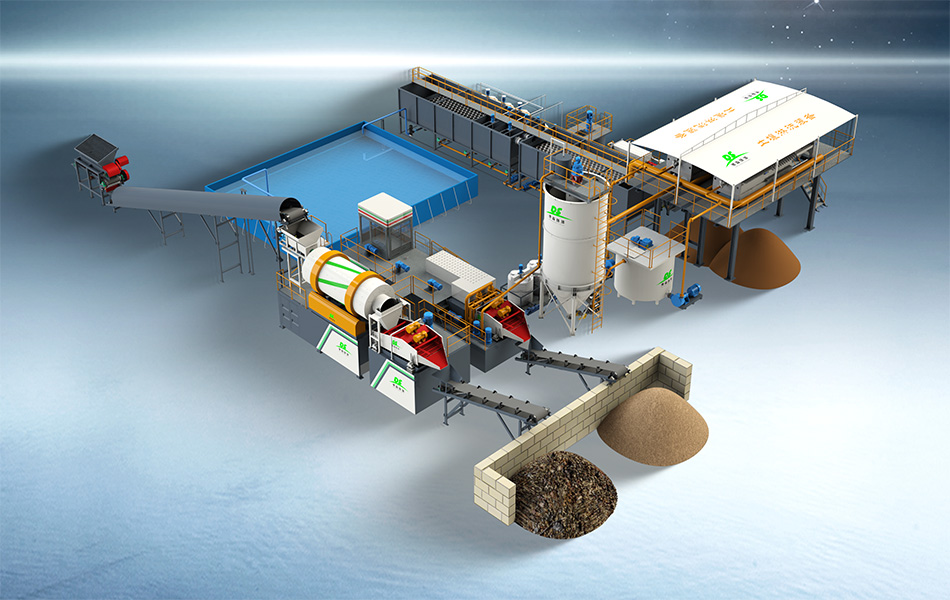
The technical core of both systems is nearly identical: feed hopper, scrubber, hydrocyclones, classification screens, and a water treatment loop. The real difference is packaging. A skid-mounted soil washing plant is pre-assembled on steel frames, so each module rolls off a flatbed, gets craned into place, and connects to water and power like a container unit. Crews at Zhengzhou Desen Environmental Technology typically commission a skid-mounted line within days rather than weeks.
A fixed soil washing plant, by contrast, sits on poured concrete, with hard-piped utilities, dedicated settling ponds, and often a permanent laboratory. It makes sense where the contaminated volume is huge, the treatment period stretches over years, or the site will keep receiving contaminated material after the initial campaign finishes.
Where Each Configuration Earns Its Keep
Skid-Mounted Advantages
- Mobility: one plant can serve multiple excavation areas or even different cities as projects rotate.
- Fast mobilization: hook-up in days, which matters when a remediation schedule is already behind.
- Smaller footprint: modules stack vertically, so less land is tied up for the plant itself.
- Resale value: a modular plant keeps its market value because it can be redeployed.
Fixed Plant Advantages
- Higher sustained throughput for mega projects, with room for flotation and attrition circuits.
- Simpler maintenance: walk-in access to every pump and screen, no container walls in the way.
- Stable water chemistry: larger tanks buffer fluctuations better than compact loops.
- Lower per-tonne cost once running volume is high enough.
Field Notes from Real Remediation Work
In a recent battery of projects, Desen Environment deployed skid-mounted washing trains to treat lead- and arsenic-contaminated soil across three separate excavation areas in the same region. Because the units were pre-piped and pre-wired, the team moved from one pad to the next with roughly a week of downtime, something a fixed plant could never offer. On the other side of the ledger, a fixed installation suits a single large site where the plant will operate for years; the extra capital is paid back through a lower operating cost per tonne.
Equipment selection is rarely about which technology is "better." It is about matching the plant to the site's timeline, volume, and exit strategy. That is why the engineers at materialwashing.com always ask two questions first: how many tonnes actually need treatment, and what happens to the plant when the job ends?
FAQ
Can a skid-mounted plant reach the same washing efficiency as a fixed plant?
Yes. The scrubbing, classification, and dewatering stages are identical in design; packaging does not reduce removal efficiency for heavy metals, organic pollutants, or fine particles.
How long does it take to mobilize a skid-mounted system?
Typical commissioning is one to two weeks including site pad preparation, utility hook-up, and operator training, compared with one to three months for a fixed plant.
Which option costs less per tonne?
Skid-mounted units usually win on short campaigns because mobilization is cheap and the plant can be reused. Fixed plants pull ahead only when annual throughput is high enough to amortize the civil works.
Can Desen provide a pilot unit before we commit?
Yes, containerized and skid-mounted pilot lines are available for on-site trials, which is the safest way to confirm treatability before scaling up.