Oil-Contaminated Soil Hot Washing Guide
Hot water soil washing for oil-contaminated soil: how thermal washing works, equipment options, and how to choose the right plant.
Oil-Contaminated Soil Hot Washing Guide
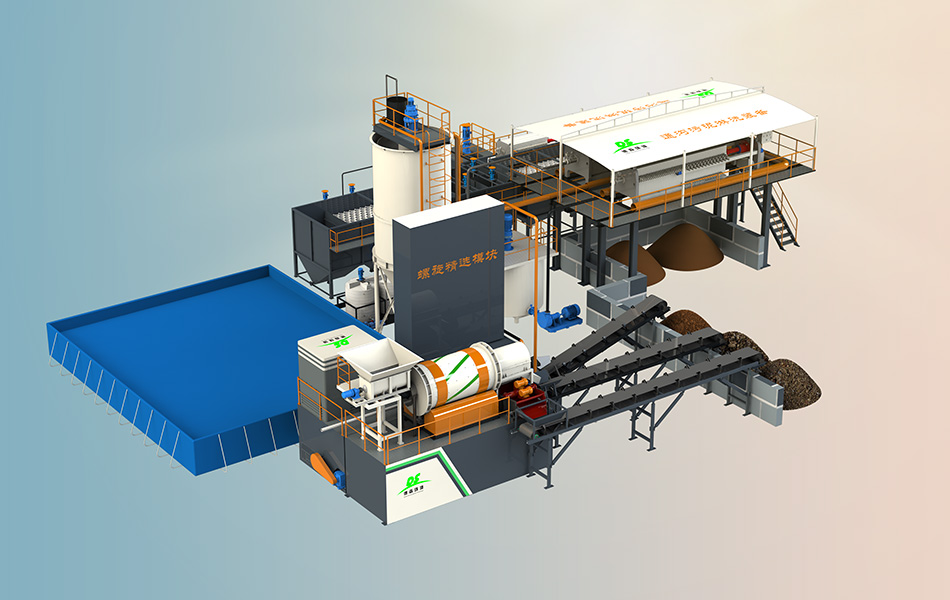
Oil-contaminated soil does not behave like ordinary dirt. Hydrocarbons cling to particle surfaces, seep into pores, and coat fines with a film that plain water alone cannot shift. That is why hot water soil washing has become a workhorse for petroleum sites: heat thins the oil, surfactants release it from the grain, and mechanical scrubbing finishes the job. Desen Environment builds thermal washing trains that turn oily spoil back into reusable fill.
How Hot Water Washing Breaks the Oil-Soil Bond
The chemistry is straightforward but the engineering is not. Raise the wash water to 60-90 degrees Celsius and the viscosity of heavy oils drops sharply, which is half the battle. Add a tailored surfactant dose and the oil-water interfacial tension falls far enough for the film to detach from sand grains. Then the scrubber imparts shear so the released oil stays suspended instead of re-adsorbing. Downstream, a three-phase separation step recovers the oil phase for disposal or energy recovery while the cleaned sand is dewatered and tested for total petroleum hydrocarbons.
Compared with thermal desorption, hot soil washing runs at far lower temperatures and energy demand, which makes it attractive for large volumes of moderately contaminated ground. It also avoids the air-permit burden that comes with firing a kiln on some sites. For weathered oil-contaminated soil, a longer retention time in the heated scrubber usually recovers more of the washing efficiency.
What a Thermal Washing Train Includes
- Heated wash circuit: direct or indirect heating with temperature control across the scrubber.
- Attrition scrubbing stage: shear force to release oil films and agglomerated fines.
- Hydrocyclone and screen classification: splits sand, silt, and oversize for different handling.
- Oil-water separation: gravity separators, coalescers, or dissolved air flotation depending on oil type.
- Water treatment and reuse loop: a closed circuit that keeps fresh water demand low.
Modules are delivered skid-mounted or containerized, so a thermal soil washing plant can be set up close to the excavation face. Zhengzhou Desen Environmental Technology has shipped such lines to petroleum storage, refinery, and pipeline sites, with throughput from 20 to more than 100 tonnes per hour depending on feed and target TPH. The same oil-contaminated soil washing train can be reconfigured between campaigns with different reagent regimes.
From the Field: A Petroleum Site That Kept Its Schedule
One recent project treated sandy clay contaminated with diesel-range organics at about 35 tonnes per hour. The first two weeks were spent tuning the surfactant dose and wash temperature, and once the recipe stabilized, the plant consistently brought TPH below the site's 500 mg/kg target. Recovered oil was collected and sent for energy recovery rather than landfilled with the soil, which cut disposal cost noticeably. The client, who had planned for a six-month campaign, finished in under four.
Every site carries a different hydrocarbon fingerprint, which is why treatability testing comes before equipment sizing. Desen Environment runs bench-scale hot washing trials on customer samples, and the results feed directly into the plant configuration quoted for the project. You can review reference installations and process details at materialwashing.com, where the team also publishes field data from recent oil-contaminated soil remediation campaigns.
FAQ
Is hot water washing the same as thermal desorption?
No. Thermal desorption vaporizes hydrocarbons at several hundred degrees; hot water washing works at 60-90 degrees Celsius and physically separates oil from soil. It is cheaper per tonne and easier to permit for moderate contamination.
What TPH levels can hot soil washing reach?
With the right surfactant and retention time, most projects reach 300 to 1,000 mg/kg TPH from starting levels of several percent, depending on clay content and how long the oil has weathered.
Can the recovered oil be reused?
Often yes. Recovered oil can be blended for energy recovery or, in cleaner cases, reclaimed, which improves the overall economics of the remediation project.
How do I know if my soil suits hot washing?
Send a representative sample for treatability testing. High clay and weathered heavy oil raise the difficulty, and the test reveals the realistic wash temperature, reagent dose, and retention time before you buy any equipment.
上一篇:Skid-Mounted vs Fixed Soil Washing Guide
下一篇:没有了!