Modular Soil Washing: Rapid Deployment
Modular soil washing plants deploy in days, treat contaminated soil on site and move on when the job is done.
Modular Soil Washing: Rapid Deployment
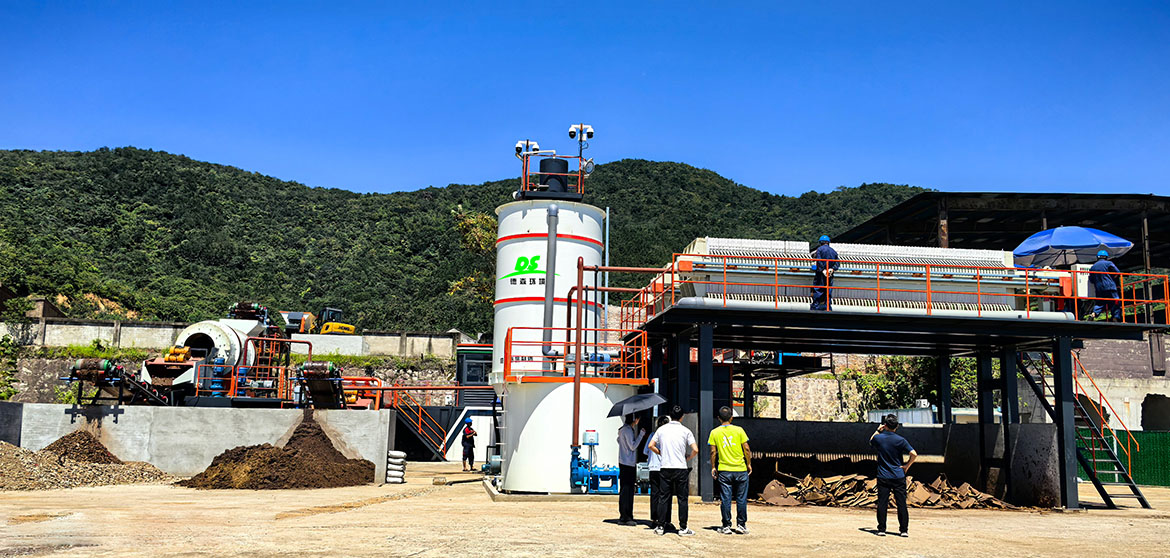
A contaminated site is a race against the calendar. Every week of delay costs the owner money, and in some deals the cleanup deadline is written into the contract itself. Modular soil washing exists for exactly that reason: it brings a full treatment plant to the site in containers, connects water and power, and starts washing within days instead of months. When the job is finished, the same modules load onto trucks and move to the next location.
What Modular Soil Washing Looks Like
The concept borrows from standard shipping containers. Screening, attrition scrubbing, hydrocyclone classification and dewatering each live in its own module, pre-piped and pre-wired at the factory. On site, the modules are craned into position, interlocked with quick-connect hoses and cables, and commissioned as a single line. Because the engineering is done before the equipment arrives, field work is reduced to civil preparation, level ground and a water supply.
Capacity scales the same way. A contractor starts with a single washing module rated at 20 tonnes per hour, then adds a second line when the tonnage proves out. That staged investment is hard to beat when remediation budgets are uncertain or phased by regulatory approval.
Where the Modular Advantage Shows
Speed is the headline, but the deeper benefit is flexibility. Modular soil washing plants suit sites that are too large for a portable unit and too short-lived for a permanent building. They also fit projects where the contamination profile changes, because modules can be reconfigured, a chemical dosing skid added, a finer classification cyclone installed, without touching the rest of the line.
Site cleanup after the campaign is equally simple. The modules are removed, the pads are broken up, and the land returns to its previous use. For developers, that reversibility is a selling point when land is leased rather than owned.
Case Study: From Signing to Production in Ten Days
A manufacturing site in the Middle East carried petroleum hydrocarbon contamination across 40,000 cubic metres of soil. Desen Environment delivered a modular washing line in two container batches. Civil works were prepared while the containers were in transit, so the plant was producing at 30 tonnes per hour ten days after contract signature. The campaign ran four months and returned roughly 70 percent of the material as clean backfill, with the concentrate treated separately and disposed of under permit.
The client's report focused on one number: handover happened on the day the contract promised. That predictability is what modular soil washing sells, and it is harder to price than steel and pumps.
FAQ
How long does a modular plant take to set up?
Typical commissioning runs from a few days to two weeks, depending on site access, water supply and whether the ground needs preparation.
Can modules be added later?
Yes. The containerised design uses standard interfaces, so extra washing or dewatering modules can be bolted on as throughput requirements grow.
Is modular soil washing cheaper than a fixed plant?
For a single campaign it is usually cheaper overall because engineering, permitting and demolition of the plant are avoided. For permanent operations running for years, a fixed plant may win on operating cost.
Desen Environment (Zhengzhou Desen Environmental Technology Co., Ltd.) supplies modular and mobile soil washing systems worldwide. Contact the team at materialwashing.com for a configuration matched to your site's tonnage, contaminant and schedule.
上一篇:Mobile Screening Plant for C&D Rubble
下一篇:没有了!