Thermal Soil Washing Equipment Guide
Thermal soil washing equipment for oil contaminated soil: process, key advantages, field results and selection tips from Desen Environment.
Thermal Soil Washing Equipment Guide
Oil in soil is rarely one problem. A spill that looks simple at ground level usually turns out to be a mix of light fractions that evaporate, middle cuts that cling to sand, and a weathered residue that has soaked into the fines for years. Cold water and detergents get some of it out. For the rest, you need heat. Thermal soil washing, which scrubs the soil with heated water, steam or a hot reagent slurry, loosens the bond between oil and soil particles in a way that no amount of cold scrubbing can match. This guide covers how the process works, where it earns its keep, and how to pick the right equipment for an oil-contaminated site.
How Thermal Soil Washing Works
The principle is simple: viscosity drops as temperature rises. Heavy oil that clings to a sand grain at 15°C turns fluid at 60–80°C, and once the oil film is fluid it can be detached by mechanical attrition and carried off in the wash water. A typical thermal soil washing circuit follows four stages:
- Pre-screening and crushing, to remove oversize material and break up agglomerated lumps that would shield oil from the wash water.
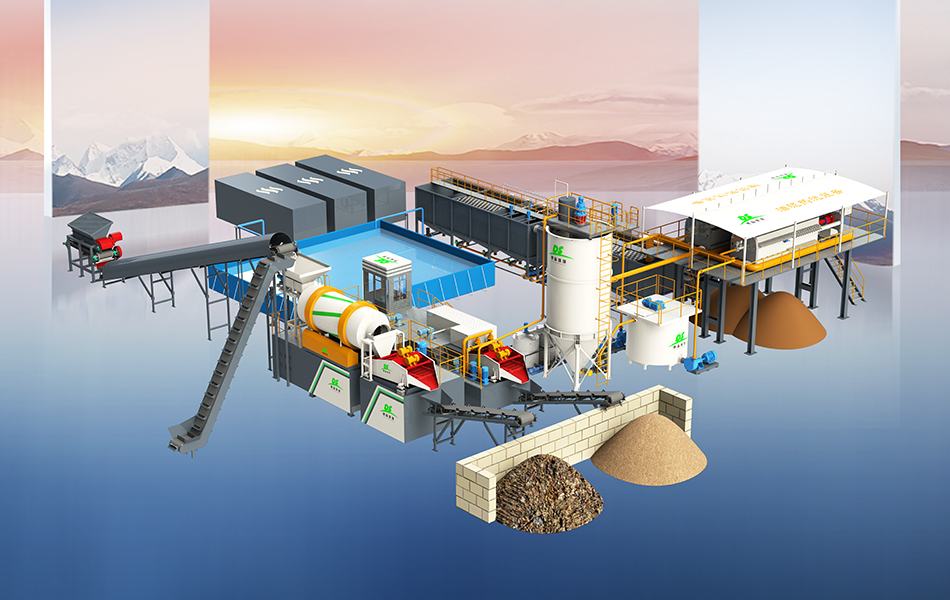
- Heated scrubbing, where soil is mixed with hot water and a tailored reagent in a drum scrubber or attrition unit. Steam injection or indirect heating keeps the slurry at the target temperature.
- Classification, usually with hydrocyclones and vibrating screens, to split clean coarse sand from the oil-bearing fine fraction.
- Dewatering and water treatment, where fines are pressed into cake and the process water is treated and recycled through the circuit.
The equipment list looks familiar to anyone who has run a cold washing plant. The difference sits in the heating stage, the temperature control, and the reagent recipe, and that is where the performance gap opens up.
Why the Heat Matters
Cold washing works well on fresh spills and light products. Once a site has weathered for years, the picture changes. Aged oil migrates into pore spaces, oxidises at the surface, and binds tightly to silt and clay. Raising the wash temperature does three things that matter on these sites:
- It drops oil viscosity, so the hydrocarbon film releases from grain surfaces instead of smearing.
- It speeds up reagent reactions, which cuts retention time and lets a smaller plant handle the same tonnage.
- It shifts the contaminant into the liquid phase, where it can be skimmed, separated and treated instead of being left on the solids.
That last point is the one project managers tend to remember. Thermal soil washing concentrates the oil into a manageable stream, recovered oil, oily sludge and filter cake, while the clean sand fraction goes back to the excavation. The alternative on heavy contamination is often thermal desorption, which is effective but hungry for energy and expensive to run at volume. Thermal soil washing sits between cold washing and desorption on both cost and capability, which is why it keeps showing up in the middle of treatment trains.
What Field Experience Shows
Desen's project archive offers a clear pattern: thermal soil washing appears where cold washing plateaus. On a Middle East site treating sandy soil carrying five to eight percent petroleum hydrocarbons, a range far too heavy for routine washing, the winning route was washing first, then biological polishing of the concentrated fine fraction, as documented in the company's published case notes. Raising the wash temperature in thermal soil washing was part of making the first stage economically honest: at those loadings, cold water alone would have pushed far too much hydrocarbon into the effluent loop.
In bench tests run by Zhengzhou Desen Environmental Technology before full-scale mobilisation, the usual finding is that heated water plus an oxidant or surfactant combination lifts the release of weathered C16–C40 fractions well above what ambient-temperature washing achieves on the same soil. Site operators also report fewer blinding issues on screens and hydrocyclones, because the slurry stays fluid and the oil stays emulsified rather than re-coating the equipment.
Choosing the Right Thermal Soil Washing Equipment
Equipment selection for thermal soil washing depends on three numbers: tonnage, contamination loading and site life. Small parcels and urgent schedules suit mobile units, and Desen's trailer-mounted washing line integrates feeding, scrubbing and fine sand screening on one skid, with no civil works needed. Larger, multi-year programmes justify a fixed plant with full integration of scrubbing, classification, dewatering and water treatment. Modular skid systems split the difference: they commission in days, grow with the project, and relocate when the job ends.
Frequently Asked Questions
What temperature does thermal soil washing use?
Most Desen thermal soil washing applications run wash water between 60 and 80°C. Heavier residues or emulsified sludges may need hotter conditions, which pushes the configuration toward steam-assisted scrubbing.
Can thermal soil washing handle every oil-contaminated soil?
It handles most weathered hydrocarbon soils well, especially sandy and loamy material. Highly bituminous or solidified sludge above practical limits usually belongs in thermal desorption or a stabilisation route instead, and a bench test on the actual soil settles the question.
Is the cleaned soil reusable on site?
Yes, when it meets local screening values. In typical campaigns, 60 to 80 percent of the treated volume returns as reusable fill, while the oil concentrate and filter cake go to compliant disposal.
How does Desen size a thermal soil washing plant?
Start with a soil sample and site history. Desen runs lab-scale tests, confirms achievable removal, then sizes the plant and quotes a fixed-cost plan before anything moves to site.
Oil-contaminated soil does not have to mean decades of waiting or landfill bills. If your site carries weathered hydrocarbons, send the lab data to the Zhengzhou Desen Environmental Technology team through materialwashing.com, and Desen Environment will tell you honestly, backed by the Zhengzhou Desen Environmental Technology team, whether thermal soil washing is the right route, and what the numbers look like.