Ditch Sludge Treatment Equipment Guide
Ditch sludge treatment equipment for dredged sludge: process stages, key advantages, field results and selection tips from Desen Environment.
Ditch Sludge Treatment Equipment Guide
Every city has the same quiet problem hiding under its streets. Drainage ditches, storm channels and sewer networks collect silt, sand and organic debris year after year, and when the cleaning crews dig it out, nobody wants to take it. Raw ditch sludge is wet, smelly and full of contaminants, so trucking it to landfill is expensive and increasingly restricted. Ditch sludge treatment changes that picture: instead of paying to dispose of the whole volume, a treatment plant separates the sludge into clean sand, dewatered cake and treated water, each with a clear end use. This guide explains how the process works, what the equipment looks like, and what to expect when you run one.
How Ditch Sludge Treatment Works
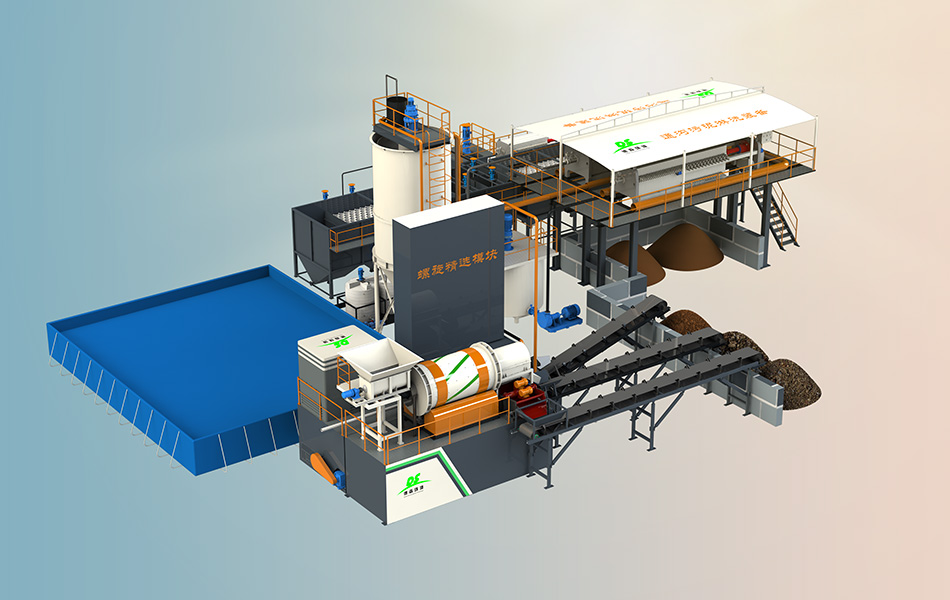
The logic behind ditch sludge treatment is the same as soil washing: contaminants and organic matter concentrate on the fine fraction, while sand and gravel can be washed clean and reused. A typical ditch sludge treatment line follows these stages:
- Feed and pre-screening. Incoming sludge is screened to strip out litter, roots, stones and coarse debris before anything else touches it.
- Scrubbing and washing. A drum scrubber or attrition unit breaks up clumps and detaches silt and organics from sand surfaces.
- Classification. Hydrocyclones and dewatering screens split the slurry into a clean coarse sand stream and a fine silt stream.
- Thickening and filter pressing. The fine stream is flocculated, thickened and pressed into a cake with a dry solids content high enough for compliant disposal or further treatment.
- Water treatment. Process water is clarified and recycled in a closed loop, so the plant does not drain the local water supply or discharge untreated effluent.
The result is a dramatic volume cut. Most projects find that 60 to 80 percent of the incoming sludge volume comes back as washed sand ready for construction fill, leaving only a small concentrated cake to manage.
Why Ditch Sludge Treatment Makes Sense
The advantages show up in both the budget and the environmental report:
- Volume reduction. The material that actually leaves the site shrinks by more than half, which cuts haulage, landfill fees and carbon emissions at once.
- Material recovery. Washed sand and gravel return to useful service as backfill, subgrade or aggregate, instead of occupying landfill space.
- Closed-loop water. Water is treated and reused on site, which matters in cities where discharge permits are hard to obtain.
- Relocatable design. Desen's mobile and modular ditch sludge treatment units arrive in containers, commission within days and move to the next catchment when the job is done.
Cities also appreciate the public relations angle: a visible treatment plant that turns smelly dredgings into clean fill is far easier to defend than a fleet of trucks heading to a landfill every night.
Field Notes from Dredging Campaigns
Desen Environmental Technology has supplied ditch sludge treatment and dredged sludge washing and disposal plants for municipal and industrial clients in Asia, the Middle East and beyond. The recurring lesson from those projects is that feed variability is the real challenge, not the equipment. One ditch may deliver sandy material with low organics, while the next block over produces sticky clay sludge that needs longer scrubbing and heavier flocculant dosing.
That is why Desen runs a feed characterisation test before sizing a plant. The team at Zhengzhou Desen Environmental Technology checks particle size distribution, organic content and contamination levels, then tunes the scrubbing time, reagent and water balance to the actual material. In one recent municipal campaign, the plant recovered clean sand that met local fill specifications, and the filter cake dropped to about 25 percent of the original sludge volume, dramatically shrinking the disposal bill.
Choosing the Right Configuration
Selection depends on daily tonnage, site space and how long the work will last. A mobile ditch sludge treatment line suits seasonal cleaning programmes and multiple catchments, because it can be redeployed quickly. Fixed installations make sense for treatment centres that will operate for years. Modular skid systems sit in between, offering a fixed-style process that can be expanded as volumes grow. Whatever the configuration, the key components of ditch sludge treatment, scrubbing, classification, dewatering and water treatment, stay the same; only the packaging changes.
Frequently Asked Questions
How dry does the filter cake get?
With a well-tuned filter press, municipal ditch sludge typically reaches 45 to 60 percent dry solids, which is dry enough to stack, transport and dispose of cost-effectively.
Can the washed sand be reused?
Yes, when it meets the local specification for fill or aggregate. Many Desen projects return the coarse fraction to construction use, and third-party testing confirms the quality before any material leaves the plant.
Is ditch sludge treatment the same as soil washing?
The equipment family overlaps, but ditch sludge treatment is tuned for wetter, more organic feed with higher debris content. Desen adapts the scrubbing and water treatment stages accordingly, which is why the same manufacturer serves both markets.
How long does it take to mobilise a plant?
Desen's modular ditch sludge treatment equipment typically commissions within seven to ten working days, including water circuit testing and operator training.
Ditch sludge does not have to be a disposal headache. If your city or project is looking for a better way to handle dredged material, send the sludge analysis to the Zhengzhou Desen Environmental Technology team through materialwashing.com, and Desen Environment will size a ditch sludge treatment plant for your tonnage and budget.
上一篇:Thermal Soil Washing Equipment Guide
下一篇:没有了!