Mobile Screening for Construction Waste
How a mobile screening plant turns construction waste into reusable aggregates on site, with tonnage and recovery data from Desen Environment.
Mobile Screening for Construction Waste
Walk past any demolition site in a growing city and you will see the same picture: broken concrete, brick rubble, rebar and spoil stacked high, waiting for trucks that get more expensive every year. Construction waste is heavy, bulky and full of material that never belonged in a landfill in the first place. The real question is no longer whether it can be recycled, but how fast and how cleanly. For contractors who work it out, a mobile screening plant has become the first machine on the job and the last one off it.
How a Mobile Screening Plant Works
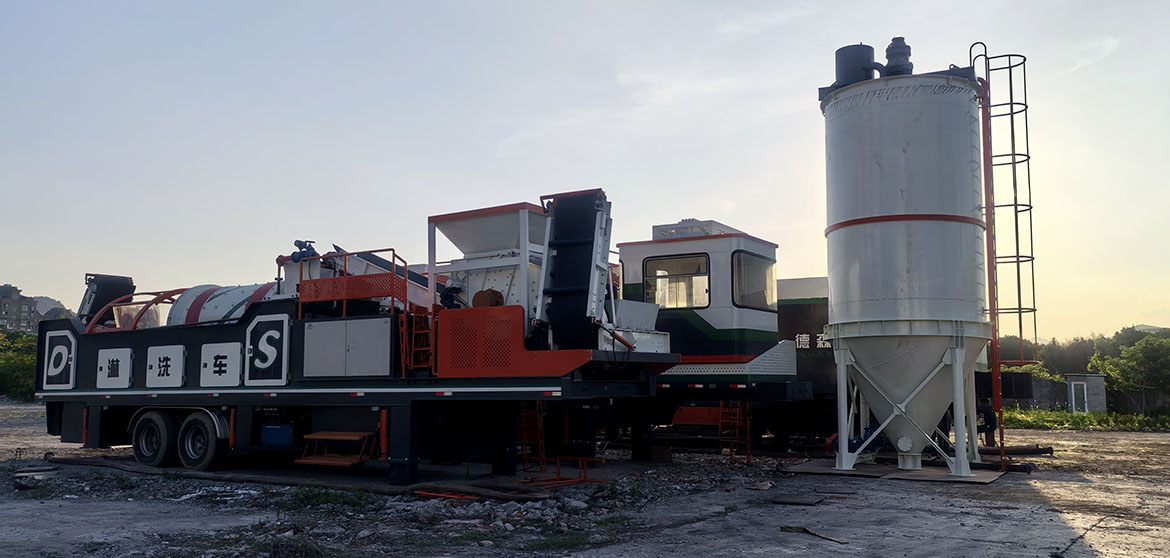
At its core, the mobile screening plant does one job: it takes mixed demolition and excavation spoil and splits it into usable fractions before anything else happens. Oversize concrete and brick ride over a heavy-duty trommel or vibrating screen, while the finer material falls through and moves to its own stockpile. Most Desen units add an overband magnet to the line, so rebar and loose metal come off as a saleable stream instead of a contaminant.
The real skill is matching the deck to the material. Recycled aggregate for road base needs a different cut point than blended topsoil, and that is why screen panels on Desen mobile screening equipment can be swapped in under an hour. One morning the machine is splitting demolition waste into 0-40 mm aggregate; the same afternoon it can be classifying excavated spoil for fill.
Technical Advantages That Show Up on the Ledger
- On-site processing. Screening at the source kills haulage costs twice: less material leaves the site, and only the fractions you actually need move at all.
- A cleaner product. Magnets pull out metal, and adjustable decks separate concrete, brick and soil, so each stockpile meets a spec instead of a guess.
- Rapid redeployment. A track-mounted unit follows the excavation front across a multi-phase project without re-erection or new permits.
- Small footprint. The complete plant needs little more than a level pad and a power take-off, which matters on tight inner-city sites.
Case Study: 180,000 Tonnes on a Highway Job
On a highway-widening project outside Zhengzhou, the contractor faced 180,000 tonnes of broken concrete and excavated spoil, with a permit condition that at least 70 percent had to be diverted from landfill. Zhengzhou Desen Environmental Technology supplied a mobile screening plant to work alongside a mobile crusher. Over nine months the line produced roughly 120,000 tonnes of 0-40 mm recycled aggregate for sub-base and pipe bedding, pulled out about 1,800 tonnes of steel scrap, and returned the fine spoil to the landscape contract for capping. Disposal cost landed about 60 percent below the original tender allowance, and the client finished the earthworks phase three weeks early.
FAQ
Can a mobile screening plant handle rebar and other metal?
Yes. An overband magnet removes ferrous metal before it reaches the stockpile, and light contamination such as timber and plastic is controlled by deck configuration and, where needed, an air separator.
What grades of recycled aggregate can be produced?
With interchangeable screen decks, common outputs include 0-40 mm sub-base aggregate, 10-20 mm concrete aggregate and fine sand, all tested against local fill and road specifications.
How quickly can the plant be set up?
Most Desen units are producing within a day of arrival. Track-mounted machines walk off the low-loader and into position without crane work.
Does screening clean contaminated demolition material?
Screening separates and sizes; it does not remediate. If the material carries chemical contamination, it should pass through washing or another treatment step first. Desen Environment's washing lines cover that part of the job.
Screening is the cheapest win in construction waste recycling, and it pays for itself before the first stockpile is sold. Desen Environment builds trailer- and track-mounted mobile screening plant configurations from 80 to 400 tonnes per hour, backed by more than a decade of recycling projects across China and overseas. Send your material profile to the Desen team at materialwashing.com and get a machine recommendation with projected recovery rates.