Oil-Contaminated Soil Thermal Washing: Technology and Equipment Selection
Thermal washing for oil-contaminated soil: process principles, equipment selection guidance and field results from Desen Environment.
Oil-Contaminated Soil Thermal Washing: Technology and Equipment Selection
Oil-contaminated soil thermal washing sounds like a niche answer, but it shows up in more tenders every year. Terminals, refineries, tank farms and old workshop floors leave behind soil where the oil has aged into something thick and sticky. Cold water alone struggles with that material. Heat changes the picture. By raising the wash water temperature, the process thins the oil, weakens its bond to sand grains and lets mechanical scrubbing finish the job. This article walks through how thermal washing works, where it earns its keep, what the numbers look like on real projects, and how to pick equipment without getting talked into a system you do not need.
How Thermal Washing Works
The principle behind oil-contaminated soil thermal washing is deceptively simple: oil gets less viscous as it gets warmer. At 60 to 90 degrees Celsius, weathered hydrocarbons that behave like tar at ambient temperature start to flow again. Once the oil film loosens, an attrition scrubber or drum washer can shear it off the mineral surface far more effectively than in a cold slurry. The freed oil either floats for skimming or binds to fine particles that are then separated by hydrocyclones and settled out in a thickener.
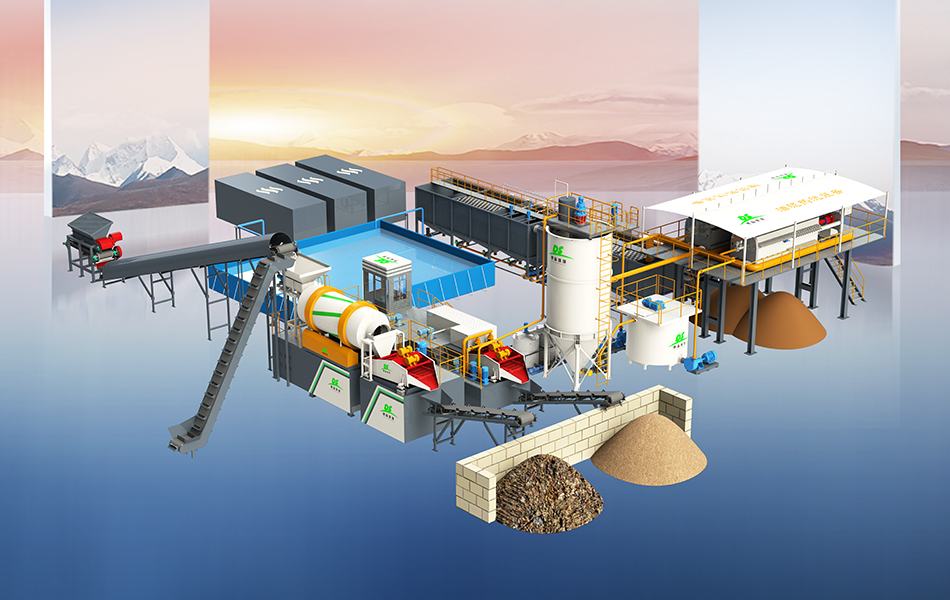
A practical thermal washing line normally stacks these steps:
- Feed preparation — scalping screen removes debris and oversize, while a hot water tank or steam injection brings the slurry up to temperature.
- Heated scrubbing — the core stage, where heated slurry passes through an attrition scrubber or washing drum with controlled retention time.
- Oil and fines separation — hydrocyclones split clean coarse sand from oil-laden fines; a skimmer or flotation cell recovers free oil where concentrations justify it.
- Dewatering and water treatment — filter press turns the fines into dry cake, and the closed-loop water system reheats and recycles process water.
Retention time and temperature are the two levers an operator actually controls. Raise either one and removal improves, but energy cost climbs with it. That trade-off is why pilot testing on site-specific soil matters more than any brochure figure.
Why Sites Choose Thermal Washing
Thermal washing earns its place on sites where conventional cold washing leaves residual hydrocarbons above target. Three advantages keep bringing contractors back to the method:
- Higher removal on weathered contamination — heated water penetrates aged oil films that cold washing smears around without detaching.
- Faster cycles — because the oil releases sooner, retention time shortens and throughput per tonne of equipment rises.
- Volume reduction before disposal — clean sand can be returned to the excavation while only a small, concentrated fines stream moves off site.
There is a cost side, and honest sellers mention it. Heating the slurry takes energy, either from an electric boiler, a diesel heater or waste heat from an on-site process. On remote sites fuel logistics can sting. That is why the heated route suits medium to high concentration TPH sites where the premium for heat is repaid by hitting compliance in one pass instead of two.
Case Analysis: Thermal Washing in the Field
Desen Environment has deployed heated washing trains on petroleum hydrocarbon projects across China and the Middle East. One representative campaign treated diesel-range contamination at a former logistics depot where the top two metres of sandy loam carried TPH levels around 18,000 mg/kg. A mobile heated washing unit from Zhengzhou Desen Environmental Technology Co., Ltd. ran at 25 tonnes per hour with wash water held near 75 degrees Celsius. The coarse sand fraction came out below 1,000 mg/kg and went back as structural fill; the fines concentrate, roughly 18 percent of the input volume, was dewatered and disposed of under permit. Water recycling held above 90 percent, with fresh top-up limited to evaporation and cake moisture.
What the project illustrated is that the equipment selection decision matters as much as the chemistry. A skid-mounted heated scrubber with an integrated boiler proved easier to relocate between the depot's three contamination hotspots than a fixed plant would have been, and it cut the programme by roughly five weeks against the original dig-and-haul estimate.
FAQ: Thermal Washing Questions We Hear Most
What TPH levels suit thermal washing?
It earns its keep from about 5,000 mg/kg upward, and handles heavy sludges far beyond that. Below that range, cold washing with surfactants is usually cheaper.
Can the recovered oil be sold?
On high-concentration sites, skimmed oil can be routed to fuel blending or reprocessing. On most projects the oil content is too low to recover economically, and the aim is simply compliance.
How do I choose between a mobile and a fixed heated washing plant?
Match the equipment to the excavation plan. Multiple dispersed hotspots favour a mobile or skid-mounted line that follows the diggers; a single large stockpile with a long schedule can justify a fixed layout. Desen Environment, the engineering team behind these thermal washing systems, will run a lab feasibility test on your samples and recommend a configuration based on your soil, target values and tonnage. Share your site data through materialwashing.com to start the conversation.