Mobile Screening Plants for Construction Waste Recycling: A Practical Guide
Mobile screening plants for construction waste recycling: how they work, why they win on demolition sites, and selection guidance.
Mobile Screening Plants for Construction Waste Recycling: A Practical Guide
Construction waste recycling rarely fails because of chemistry. It fails because somebody underestimates how messy the feed is. Concrete slabs arrive with rebar, bricks arrive with mortar stuck to them, and soil arrives mixed with everything. A mobile screener sits at the front of that problem, splitting the pile into fractions that can actually be sold, reused or disposed of. This guide covers how mobile screening works, why it beats static setups on many demolition sites, what real projects show, and the questions that sort a sensible purchase from an expensive mistake.
How Mobile Screening Works
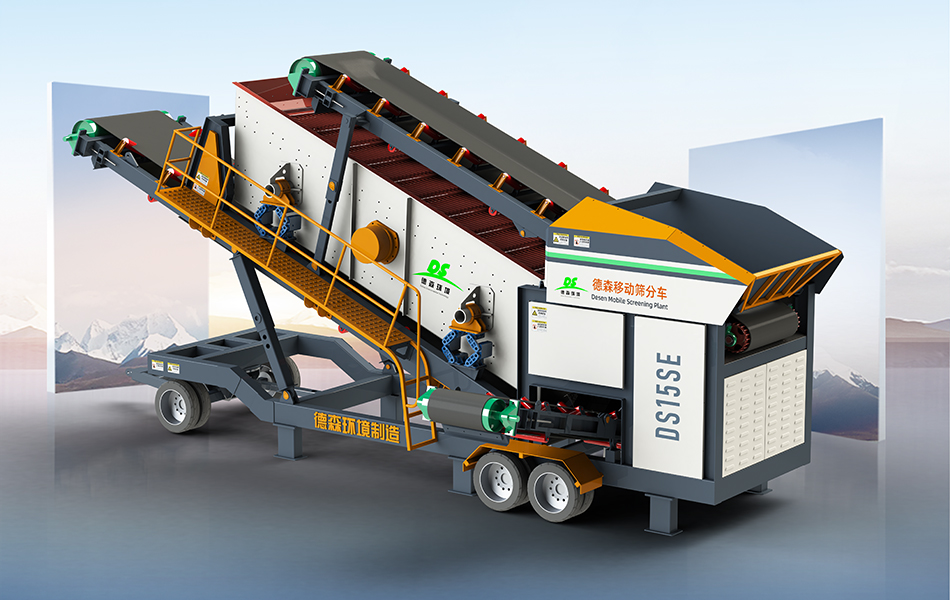
A mobile screening plant does one job well: it separates mixed material by size while it is still on site. The usual layout starts with a feed hopper and a vibrating or trommel screen. Oversize material — the big concrete chunks and rubble — is rejected or sent to a crusher, while undersize falls through for further classification. A two-deck or three-deck screen adds intermediate cuts, so you walk away with graded aggregates, a sand-rich fraction and a fines fraction in a single pass.
The key design choices on a mobile screener are:
- Screen type — trommel drums handle sticky, clay-rich material without blinding; vibrating screens give sharper cuts on drier feed.
- Drive and mobility — tracked units move around the site under their own power; wheeled or semi-trailer units are towed between projects.
- Washing option — a spray bar or integrated washing drum removes attached fines from recycled aggregate, lifting its value for road base and backfill.
- Dust and noise control — water suppression and enclosed chutes keep a demolition site neighbourhood-friendly and compliant.
None of these decisions is right in the abstract. Feed composition decides them, which is why a quick sieve analysis of the waste pile is worth far more than a spec sheet.
Why Mobile Screening Wins on Demolition Sites
Static screening plants need foundations, power supply and space. Demolition sites have none of those in predictable places. That mismatch is exactly what mobile equipment exploits:
- Rapid deployment — a trailer-mounted plant can be running within a day of arrival, and moved again when the work zone shifts.
- No fixed civil works — no concrete pads, no permanent power runs, no decommissioning cost at the end.
- On-site value recovery — recycled aggregate displaces virgin quarry material, and keeping it on site cuts haulage and tipping bills.
- Flexible campaign planning — the same screener serves multiple demolition plots in sequence, spreading the capital cost.
The economics are straightforward on paper and better in practice when landfill costs are high. Every tonne of concrete kept out of the tip and sold as recycled aggregate is revenue on both sides of the ledger.
Case Analysis: Mobile Screening in the Field
Desen Environment has supplied mobile screening and washing equipment for construction and demolition recycling programs in several Chinese cities. One urban redevelopment project in the south processed roughly 120,000 tonnes of mixed demolition waste over eight months. A mobile screening train from Zhengzhou Desen Environmental Technology Co., Ltd. separated the feed into 0-10 mm fines, 10-40 mm recycled aggregate and plus-40 mm oversize. The aggregate fraction passed local road base specifications after a washing pass and was reused within the same development, while the fines went to landscaping fill. The contractor reported that keeping the plant on site eliminated more than 4,000 truck movements compared with hauling the waste to a remote processing yard.
The lesson from that project: throughput matters, but so does uptime. A screener that jams on wet concrete fines is a liability regardless of its rated capacity. Reliable screening media, easy access for cleaning and a manufacturer that answers the phone count for more than peak tonnage figures.
FAQ: Mobile Screening Questions We Hear Most
Can a mobile screener handle wet, sticky material?
Yes, with the right configuration. Trommel screens with brushing and spray systems cope with clay-rich fines far better than flat decks. If the feed is consistently wet, specify a washing drum or spray bars from the start.
What size of operation justifies a mobile screener?
Even a single demolition site of 20,000 tonnes can justify a hire or purchase when landfill fees and haulage are expensive. For contractors working several sites a year, ownership usually pays back within two projects.
How do I choose the right equipment?
Start with the feed analysis: particle size distribution, moisture, and contamination level. Then match screen type, deck configuration and washing needs to that profile. Desen Environment, the engineering team behind these mobile screening systems, provides process recommendations and pilot support before you commit — reach the team through materialwashing.com with your material data and target products to get a configuration that fits.