Mobile Soil Washing Equipment for Heavy Metal Contaminated Site Remediation
Mobile soil washing equipment cuts heavy metal contaminated soil volume fast, with field project data from Desen Environment.
Mobile Soil Washing Equipment for Heavy Metal Contaminated Site Remediation
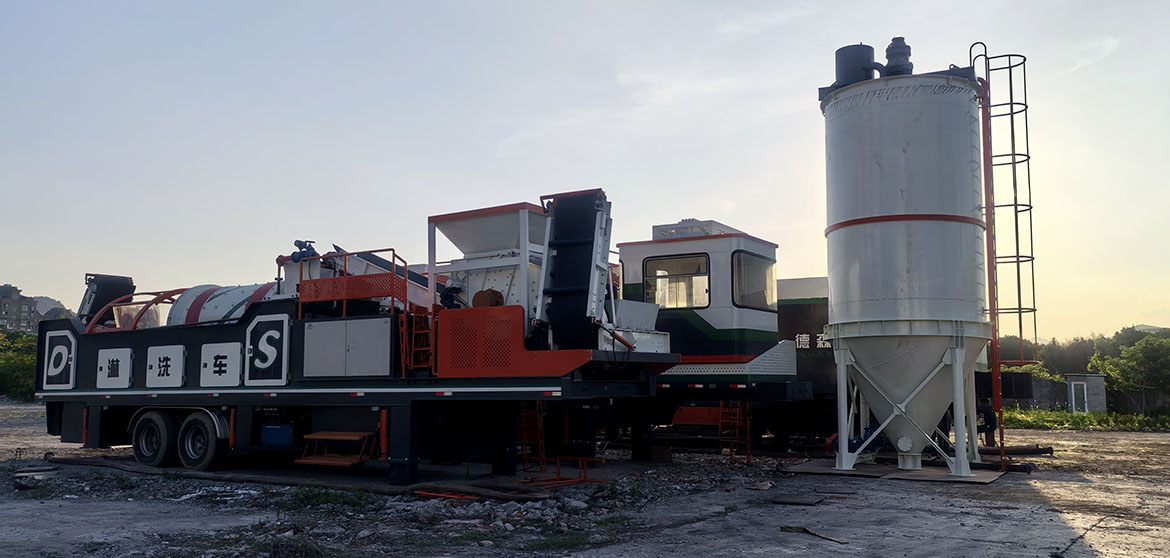
A decommissioned smelter hands you a map of lead hotspots, a deadline, and a budget that assumes the problem shrinks while you sleep. Heavy metal contaminated soil does not behave that way. Lead, cadmium, chromium and arsenic stay exactly where they are, and every month the site sits idle the holding cost climbs. Mobile soil washing equipment has become the first option many remediation contractors reach for, not because it is fashionable, but because it moves tonnes, cuts disposal volume and leaves a verifiable result in weeks rather than years.
Technical Principle: Washing Splits the Problem, Chemistry Finishes It
Heavy metals concentrate on the fine fraction, which is precisely what mobile soil washing equipment is built to exploit. Silt and clay carry far more surface area per gram than sand, so the contamination hugs those particles while the coarser material stays relatively clean. A mobile soil washing plant follows that logic: the feed is screened, scrubbed in a rotary drum or attrition cell, then classified by size. Clean sand leaves the plant as reusable material, and the metal-bearing fines, now a fraction of the original volume, move to a filter press and a much smaller disposal bill.
Where metals refuse to let go of the particle surface, the train adds a chemical step. A chelating agent or a pH-adjusted wash solution transfers the metal into the liquid phase, where precipitation and dewatering capture it. The hardware does not change; only the reagent dosing does. That flexibility is why the same mobile soil washing equipment can move from a lead site to a chromium site with little more than a change of chemistry.
Technical Advantages: Why the Mobile Configuration Wins
Fixed plants earn their keep when the contamination never moves. Remediation projects are the opposite: the plume gets excavated in a season, and the equipment should follow the work. Mobile soil washing equipment wins on that logic, and the numbers back it up.
- No concrete foundations. A levelled pad and a power hook-up are enough, so the plant commissions within days and relocates when the job closes.
- Volume reduction of 70 to 90 percent. Only the contaminated fines leave the site, which shrinks haulage and landfill costs to a fraction of the original.
- Throughput that matches the calendar. A 30 t/h line can process a 50,000-tonne site in a single season, and a second line can be added without redesigning anything.
- Water stays on site. Closed-loop treatment recycles most of the process water, keeping both the fresh-water bill and the discharge paperwork small.
None of this shows up in a brochure. It shows up in the mass balance: when 70 percent of the excavated soil is sand, washing returns it to the excavation and the project pays to move only the concentrate.
Case Analysis: Chromium and Nickel at a Former Electroplating Plant
Desen Environment supplied a mobile soil washing line for a former electroplating facility in central China, where chromium and nickel sat well above the local screening values across roughly 40,000 tonnes of sandy loam. The train screened, scrubbed and classified at 25 tonnes per hour. The washed sand met the backfill target and returned to the excavation, while the metal-rich fines were dewatered into cake and containerised for controlled disposal. The campaign ran about nine weeks, and the client avoided hauling nearly 30,000 tonnes off site.
Comparable mobile soil washing equipment from Zhengzhou Desen Environmental Technology Co., Ltd. has treated lead, arsenic and multi-metal soils across Asia and the Middle East, and the process layouts are documented with project data on materialwashing.com.
FAQ: Questions Buyers Ask Before Signing
Does mobile soil washing handle clay-heavy soil? It can, but the sand recovery rate drops as the fines fraction rises. A quick particle-size test before you commit settles the question.
How fast can the plant start? Most Desen units commission within one to two weeks of arrival. Site preparation usually takes longer than the equipment itself.
Is the treated soil reusable? When laboratory results meet the agreed target values, yes. Many projects backfill the washed sand directly and reuse the site without importing clean fill.
What happens to the wash water? It is clarified, treated and recycled in a closed loop, so the plant does not need a big fresh-water supply or a sewer connection.