Mine Tailings Washing and Classification
Tailings washing and classification recover saleable sand from mine waste, cut dam pressure and recycle water. Field case inside.
Mine Tailings Washing and Classification
Tailings are the leftovers nobody likes to talk about. A mine can produce millions of tonnes of them, and every tonne sitting in a dam is a cost, a risk, and a lost opportunity. What many operators still treat as waste, however, often contains recoverable sand, fine aggregates and even residual metals. Mine tailings washing and classification turns that pile of liability into a usable product stream. This guide walks through the process, the equipment and what it looks like in practice.
How Mine Tailings Washing Works
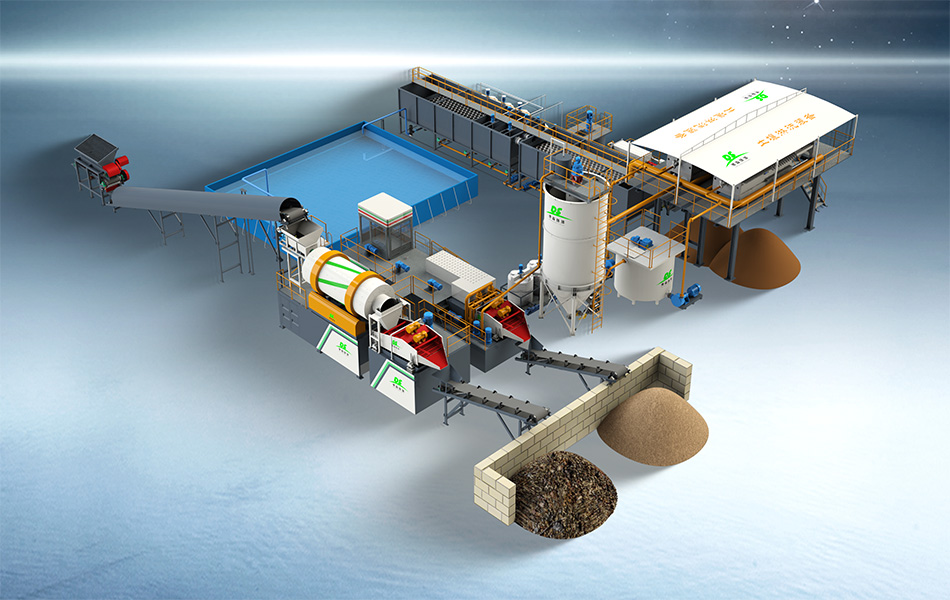
Tailings washing is not a single machine. It is a train of unit operations that starts at the feed hopper and ends at a stack of graded product. The first step is scalping: an inclined screen strips out coarse oversize and trash so the feed hits the scrubber at a predictable rate. Inside the scrubbing drum, water breaks down the clay skins that coat every particle, releasing the clean grains trapped underneath.
From there the slurry moves into the classification stage. Hydrocyclones split the stream by density and particle size, while spiral classifiers and dewatering screens carry the heavier fractions forward. Each cut produces a different product: concrete sand, plaster sand, or a fine silt fraction that can be flocculated and pressed into filter cake. The water loop closes at a thickener and a set of settling ponds, so a washing plant keeps its freshwater demand far lower than most operators expect.
The Real Advantages of a Washing Circuit
Adding a washing circuit changes the economics of a tailings stockpile in several ways.
- Saleable products instead of stored waste. Graded sand and aggregate leave the site with a price tag, not a storage bill.
- Lower dam pressure. Removing the coarse fraction reduces the volume and the moisture load that the tailings facility must handle.
- Water that keeps working. Recycled process water cuts make-up demand and shrinks the footprint of settling infrastructure.
- Faster rehabilitation. A dewatered, compacted filter cake is far easier to cap and revegetate than a saturated slurry pond.
None of this happens by accident. The value sits in the particle size distribution of the ore, and that is why site testing before equipment selection matters more than any brochure number.
From Dam to Demand: A Working Example
A small lead-zinc operation in northern China had spent years pushing tailings into an aging dam while local concrete producers imported sand from 200 kilometres away. A mobile washing and classification line from Desen Environment changed the picture. The circuit recovered construction-grade sand from the dam feed at roughly 45 tonnes per hour, dewatered the fines into filter cake for backfill, and recycled over 85% of its process water.
Within two seasons the operator had sold enough sand to cover the equipment investment, and the tailings dam had visibly shrunk. The same approach has been repeated at gold, tungsten and iron ore sites, always tuned to the local grain size curve. Zhengzhou Desen Environmental Technology Co., Ltd. keeps the modular design simple enough to redeploy when one project winds down and the next one starts.
Frequently Asked Questions
Can tailings washing handle very fine material?
Yes, but only if the circuit is sized for it. Ultra-fine fractions below 0.075 mm need flocculant dosing and a filter press; skip that stage and the water loop turns into mud. A good test lab report will tell you exactly where the split should sit.
How much water does a washing plant consume?
Fresh water make-up is typically 10-20% of the circulating volume. A thickener and settling ponds keep the rest in a closed loop, which matters in arid mining regions where water permits are hard to obtain.
Is the equipment mobile?
It can be. Skid-mounted and trailer-mounted washing lines are designed for rapid setup and relocation, which suits short-life mines and contractors working on leased ground.
What grades can we expect from the products?
That depends on the ore body, but most sites produce a concrete sand fraction, a finer masonry sand, and a silt cake. Sieve analysis of the raw tailings is the honest predictor of what you will get.
Desen Environment designs tailings washing and classification plants for sites that want less liability and more saleable output. Explore the full equipment range at materialwashing.com, or talk to the team at Zhengzhou Desen Environmental Technology Co., Ltd. about a pilot test on your own tailings sample.