Heavy Metal Soil Washing Case Studies
Heavy metal soil washing case studies: chromium tannery and lead-zinc smelter sites, process, results, cleanup levels and equipment from Desen.
Heavy Metal Soil Washing Case Studies
Remediation contracts live and die on numbers, not promises. Before an owner commits to soil washing, they want to see it working on ground that looks like theirs. That is why case studies matter: they show how a metal-laden site actually behaves inside a washing circuit, what the cleanup levels were, and what the contractor had to fight along the way. This article brings together two heavy metal soil washing projects that Desen Environment delivered, with the gritty details that tend to get left out of glossy brochures.
How Soil Washing Removes Heavy Metals
Heavy metals do not dissolve in water, so a washing plant does not rely on chemistry alone. The mechanism is physical: most of the contamination sits on fine particles, on clay coatings, and in the silt fraction rather than on clean sand grains. Soil washing exploits that distribution by screening out oversize material, scrubbing the coarse fraction until the contaminated coating comes off, and then splitting the fines into a concentrated stream that goes for further treatment or disposal.
The coarse, clean sand can usually be returned to the excavation as backfill. The metal-rich fines, which make up a small percentage of the total volume, get dewatered and handled as hazardous waste. The result is a dramatic volume reduction: a site may only need to send ten or fifteen percent of its soil off-site, instead of everything. Particle size analysis at the start tells the engineer where that split will fall, and it sets the target for the whole tender.
What Makes a Washing Project Work
- Feed preparation. Oversize rock, roots and demolition debris must be screened out before the scrubber sees them, or downtime eats the schedule.
- Water and reagent control. pH adjustment and flocculant dosing keep the fines settling fast and the recycled water consistent.
- Daily testing. A field lab checking metal concentrations in each product stream turns surprises into routine adjustments.
- Realistic cleanup targets. Washing cannot turn every soil into drinking-water-grade material; the remediation goal must match the particle size reality.
Skip any one of these and the project still runs, but the cost curve bends the wrong way. The teams that plan around them finish on time.
Case Study One: Chromium Soil at a Former Tannery
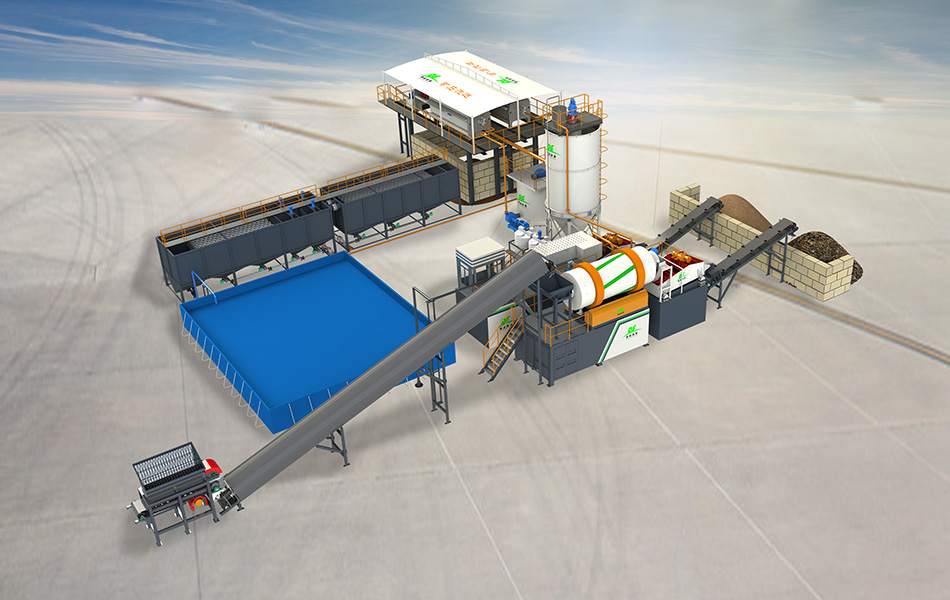
A shuttered tannery in central China left behind soil stained with chromium from decades of leather processing. The client needed the site cleared to residential standards before a housing development could move forward, and the excavation window was tight. Desen Environment deployed a trailer-mounted washing line with a scrubber, hydrocyclones and a filter press.
The plant treated roughly 400 cubic metres of contaminated soil per day. Chromium concentrations in the washed sand fraction dropped below the target threshold, while the concentrated fines went to an authorized hazardous waste facility as filter cake. The clean sand was reused on site for backfill, which removed the headache of importing fill material. The project closed out two weeks ahead of the contractual date, and the developer started piling work on schedule.
Case Study Two: Lead and Zinc Around a Smelter
Years of atmospheric fallout from a lead-zinc smelter had left elevated metal levels in the surrounding farmland topsoil. The site was too large for excavation-and-offsite-disposal economics, so the owner opted for a modular washing train that could be relocated once the hot spots were cleared. Zhengzhou Desen Environmental Technology Co., Ltd. supplied a skid-mounted circuit sized for continuous operation through two planting seasons.
Field data showed lead and zinc concentrated overwhelmingly in the silt and clay fractions. After washing, the sandy fraction met the agricultural screening levels for the region, and the small volume of metal-rich fines was stabilized and landfilled. Because the equipment was modular, the same line moved to a second parcel the following season without a fresh procurement cycle. materialwashing.com carries the full specifications of the units used on both jobs.
Frequently Asked Questions
Does soil washing work for every heavy metal?
It works best when metals sit on the particle surface, which is the case for lead, zinc, copper and chromium in most weathered soils. Metals that have diffused into the mineral lattice are a different problem and may need a different tool.
How much soil can a washing plant process?
Desen's mobile lines typically handle between 30 and 60 tonnes per hour depending on the feed. For bigger jobs, multiple units run in parallel and share one water treatment loop.
What happens to the contaminated fines?
They are dewatered into filter cake and sent to licensed hazardous waste disposal. The whole point of washing is to shrink that volume to the smallest possible share.
Can the equipment be moved to another site?
Yes, and this is where the modular design pays off. Skid-mounted units are container-friendly and can be re-erected at a new location within days, which keeps the capital working across multiple projects.
Heavy metal soil washing is a proven path to shorter schedules and lower disposal bills. Desen Environment builds the equipment, runs the pilot tests, and supports the fieldwork from first sample to final backfill. See the machine range and past project references at materialwashing.com, or contact Zhengzhou Desen Environmental Technology Co., Ltd. directly.
上一篇:Mine Tailings Washing and Classification
下一篇:没有了!