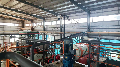
Mobile Screening Plant for C&D Waste Recycling
See how a mobile screening plant turns C&D waste into reusable aggregate: working principle, field results and selection FAQs from Desen Environment.
Mobile Screening Plant for C&D Waste Recycling

Construction and demolition waste is the heaviest stream most cities produce, and the default way to handle it is still the most expensive: truck mixed rubble to a landfill and pay by the tonne. A mobile screening plant changes that equation on site. The unit splits the pile into oversize reject, clean aggregate and fine sand, so contractors stop paying to haul material they could sell or reuse. This article explains how mobile screening equipment works in C&D waste recycling, what the operating numbers look like, and what Desen Environment has learned running these plants on real projects.
Why Screening Belongs at the Front of C&D Recycling
C&D waste is never one material. A single load can hold broken concrete, brick, timber offcuts, rebar, packaging film, soil and a surprising amount of sand. Downstream processes — crushers, soil washing lines, landfill cover plants — all work better when the feed arrives sorted. Oversize blocks jam crushers and tear belts; clay and fines blind screens and spoil otherwise good aggregate. Put a mobile screening plant in front of the line and every tonne that follows behaves more predictably.
How the Mobile Screening Plant Separates the Stream
The mobile screening plant supplied by Desen Environment, model DS15SE, is a two-deck heavy-duty screen mounted on a three-axle trailer. An excavator or hopper feeds the top deck, where mesh openings from 2 cm up to 6 cm (custom sizes available) split the material into three fractions: oversize reject, mid-size aggregate and fine sand. The screen box sits on elastic vibration supports that keep the stroke steady and the noise down, and the conveyor belts are seamless vulcanised rubber with five nylon layers — the kind of belt that survives abrasive rubble without delaminating.
The mobile screening plant handles 60 to 200 tonnes per hour depending on feed conditions, with a maximum feed size of 150 mm and screening efficiency above 90 percent. Installed power is just 28.5 kW, which sounds modest until you realise it means the whole plant can run off a small generator on a remote site.
What the DS15SE Brings to a C&D Site
- Rapid relocation: the unit is trailer-mounted and towed by a standard truck, so one machine can serve several demolition sites in the same contract.
- Compact footprint: the integrated single-unit design cuts setup time and site space compared with fixed screening lines.
- Low energy demand: the 28.5 kW drivetrain keeps fuel or genset costs far below stationary installations.
- Three-way separation: two decks produce reusable aggregate, fine sand and a clean oversize reject in a single pass.
- Custom mesh: screen openings are changed in hours to match the target product, whether that is 2 cm sand or 6 cm aggregate.
Field Results from Desen Environment Projects
The practical value of a mobile screening plant shows up fastest in landfill mining. At a Shenzhen landfill project, Desen Environment equipment separated decades-old buried waste into plastic, film, large stone, sand and soil fractions in one pass, cutting the volume that had to be handled as mixed refuse and recovering aggregate for reuse. The same logic applies to construction rubble: at a 200 T/H landfill screening operation in Dongguan, the mobile screening plant kept the rest of the resource-recovery line fed with consistent material.
Mobile screening also plays a quieter role in soil remediation. In Chongqing and Nanjing, DS15SE units sit at the front of soil washing lines, removing oversize debris so crushers and washers never see a block they cannot handle. In a Ningxia bioremediation project, the same machine homogenised 180,000 m³ of contaminated soil, because biological treatment only works when the particle size and moisture of the feed stay uniform.
Frequently Asked Questions
How much material can a mobile screening plant process?
The DS15SE handles 60 to 200 tonnes per hour depending on feed type and moisture. Contractors typically size the mobile screening plant against the daily tonnage they need to clear.
What happens to the oversize fraction?
Large blocks can be crushed and screened again, or sold as fill. In landfill mining, the oversize stream is usually the recyclables-rich fraction that goes on to sorting and recovery.
Do I need a permanent foundation or a permit?
No. The unit deploys on any level pad, which is why it works well on short demolition contracts and remote sites where fixed plants are not viable.
What does it cost to run?
Operating cost is dominated by the 28.5 kW power draw and conveyor wear parts. Because the plant is simple, a two-person crew is enough to keep it running.
Choosing the Right Screening Setup
Every C&D site is different, but the pattern is consistent: the contractor who screens early pays less for transport, produces a saleable aggregate and keeps downstream equipment alive longer. Zhengzhou Desen Environmental Technology Co., Ltd. supplies mobile screening plants sized from 60 to 200 T/H, and the engineers at Desen Environment will match a configuration to your material. More project details are available on materialwashing.com.