Modular Soil Washing Equipment: How It Delivers Rapid Contaminated Site Remediation
Modular soil washing equipment accelerates contaminated site remediation with faster deployment and lower total cost. Desen Environment.
Modular Soil Washing Equipment: How It Delivers Rapid Contaminated Site Remediation
Remediation schedules are rarely generous. Regulators set deadlines, developers chase completion dates, and every idle month on a brownfield carries a visible price tag. That is why more project teams are turning to modular soil washing equipment: plants that arrive in containers, bolt together in days, and start processing contaminated soil almost as quickly as the excavators can feed them. This article looks at how modular design changes both the economics and the timeline of a soil washing campaign.
What Makes a Soil Washing Plant Modular
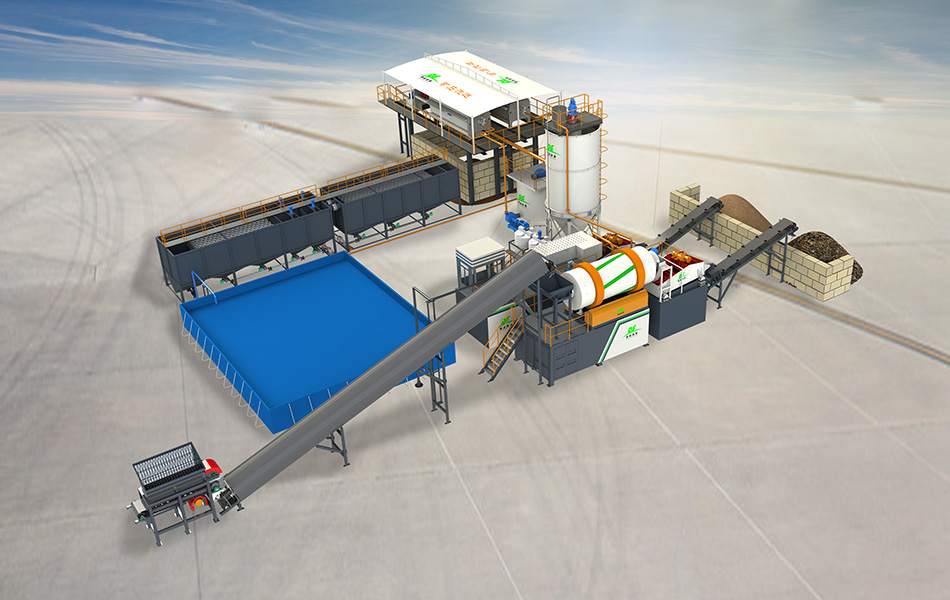
A modular soil washing plant is built around standardized units rather than one site-erected structure. Feed hoppers, log washers, hydrocyclones, attrition scrubbers, dewatering screens and water treatment modules are each skid- or container-mounted, joined by quick-release piping and plug-and-play electrical cabling.
The practical consequence is simple: the same core units can be reconfigured for different feed materials and different contaminants. A project treating sandy soil contaminated with heavy metals may run crusher, scrubber, cyclone and filter press in a single line; the next site, with clay-bound oil residue, may add a thermal or chemical conditioning stage. The equipment set stays familiar, the configuration changes.
Why Modular Design Accelerates Site Remediation
Speed enters the picture at three points. First, delivery: containerized units travel by standard truck and can sit on the pad within weeks of order, with no civil foundation work beyond a level hardstand. Second, assembly: a typical modular line can be commissioned in five to ten working days by a small crew, against the weeks or months a fixed plant demands. Third, ramp-up: because the modules have already proven themselves on other jobs, start-up troubleshooting is short and the plant reaches design throughput quickly.
There is also a flexibility argument with a direct bearing on total project cost. When a campaign finishes, modular units are demobilized, inspected and shipped to the next site instead of being written off as site-specific infrastructure. For contractors running a sequence of remediation projects, that reuse turns equipment from fixed overhead into a deployable asset.
Field Example: Two Sites, One Modular Fleet
Consider a remediation contractor handling two nearby sites with different challenges. Site A is a former battery recycling yard with lead contamination in sandy loam. Site B is a petrochemical depot with hydrocarbon-impacted clay. Rather than building two bespoke plants, the contractor configures one modular fleet twice.
At Site A, the line runs crushing, attrition scrubbing and hydrocyclone classification, with the fine fraction dewatered by filter press and tested to confirm it meets the site-specific cleanup level. At Site B, the same core modules add a hot-wash stage that strips oil from the clay before screening. In both cases the plants were commissioned within two weeks, the treatment targets were met, and the fleet moved on without leaving permanent structures behind. This pattern, repeated across dozens of sites, is what modular soil washing equipment delivers in practice: predictable throughput, auditable results and a schedule that holds.
Frequently Asked Questions About Modular Soil Washing
How fast can a modular plant start processing soil?
Most containerized lines are commissioned within five to ten working days after arrival, assuming a level hardstand and utilities are ready. Some suppliers, including Desen Environment, pre-assemble and dry-run modules at the factory to shorten on-site commissioning further.
Is modular soil washing equipment cheaper than a fixed plant?
On a single long-running project, a modular plant can carry a higher equipment cost per tonne than a purpose-built fixed plant. But for one-off or multi-site campaigns, the shorter mobilization time, lower civil works and reuse value usually make the modular route the lower total cost.
Which contaminants can modular washing handle?
Modular soil washing is well proven for heavy metals, petroleum hydrocarbons, PAHs and other contaminants that attach to the fine soil fraction. The process concentrates contaminants into a small volume of residue while the washed coarse fraction can often be reused on site.
How do I size a modular plant for my site?
Throughput is matched to the remediation schedule; common modules range from roughly 20 to 100 tonnes per hour. Zhengzhou Desen Environmental Technology Co., Ltd. runs process tests on representative soil samples before recommending a configuration, so the plant is sized from data rather than guesses.
Plan Your Next Remediation With Desen Environment
Desen Environment designs and supplies modular soil washing equipment for contaminated site remediation projects worldwide. From containerized washing lines to complete water treatment loops, the company configures systems around your contaminant profile, throughput target and schedule. Explore the equipment range and project references at materialwashing.com, or send soil samples for a process test and receive a configuration proposal that fits your timeline.