Skid-Mounted vs Fixed Soil Washing Equipment: Total Cost of Ownership Compared
Skid-mounted vs fixed soil washing equipment: compare capital cost, footprint, mobility and operating expense to pick the right plant.
Skid-Mounted vs Fixed Soil Washing Equipment: Total Cost of Ownership Compared
Ask ten remediation contractors which type of soil washing plant they prefer and you will get ten answers, because the honest reply is "it depends". A skid-mounted unit makes sense for a contractor chasing short contracts across several regions. A fixed plant can be the right call for an operator with decades of contaminated soil to process in one place. The useful question is not which design is better, but which one costs less over the full life of the project. This guide breaks the comparison down in plain terms.
What Skid-Mounted and Fixed Soil Washing Plants Are
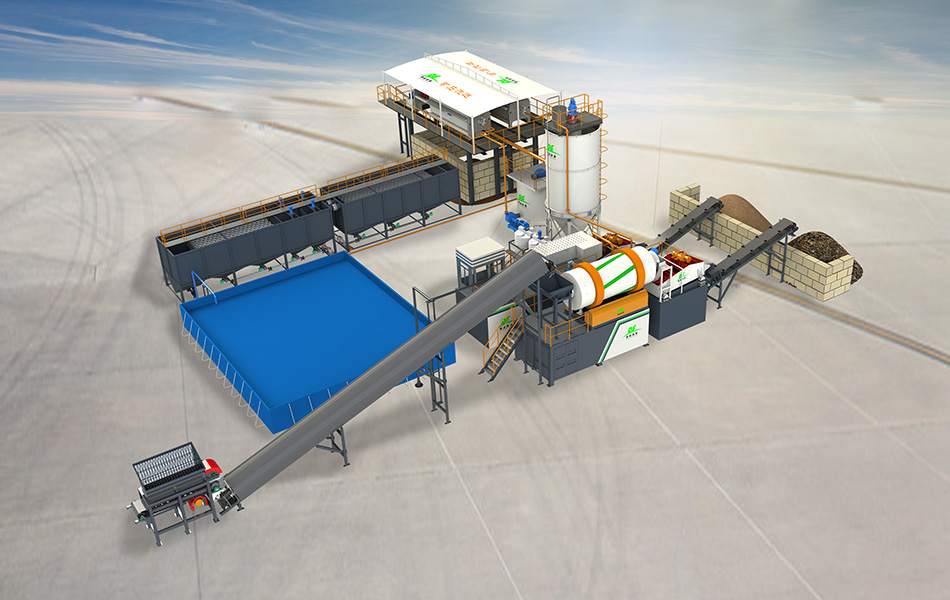
A skid-mounted soil washing plant is built on steel frames that can be lifted, trucked and repositioned as a package. The feed system, scrubbers, cyclones, screens and water treatment components arrive pre-piped and pre-wired, so assembly on site takes days rather than months.
A fixed soil washing plant is engineered around a permanent location. Foundations, structural steel, tanks and utility connections are built for the long term, and the layout is optimized for a known feed material and throughput. That permanence is an advantage when the site will keep generating contaminated material for years, and a liability when conditions change.
Where the Two Designs Differ Most
Capital cost. Skid-mounted units carry a premium per tonne of installed capacity because the frames, transport fittings and quick-connect systems add engineering. Fixed plants spread their cost over a longer operating life and larger total throughput, so their cost per tonne falls as the campaign grows.
Mobilization and footprint. A skid-mounted line can be on the ground and commissioning within one to two weeks on a level hardstand with no deep foundations. A fixed plant requires civil works, longer permitting and more site preparation before the first tonne of soil is treated.
Flexibility. When the contaminant profile or throughput changes, a skid-mounted plant can be reconfigured, expanded or relocated. A fixed plant can also be upgraded, but the changes are slower and more expensive because they touch permanent structures.
Operating expense. Both designs consume energy and water in similar ways for the same process, but fixed plants often benefit from lower unit utility rates and easier maintenance access, while skid-mounted plants pay a small premium for portability and weather protection on temporary pads.
Two Projects, Two Answers
A municipal client in eastern China needed to treat around 300,000 cubic metres of petroleum-contaminated soil at a single depot over five years. Desen Environment supplied a fixed soil washing line with dedicated hot-wash stages and a closed water loop; the civil works were justified because the treatment volume and operating life were both long.
By contrast, a contractor running short remediation contracts across three provinces chose a skid-mounted system from Zhengzhou Desen Environmental Technology Co., Ltd. The first campaign finished in four months; the equipment was then demobilized, inspected and redeployed 800 kilometres away. The portability premium was repaid by a second and a third contract that never required new capital.
Frequently Asked Questions
Is a skid-mounted soil washing plant less durable than a fixed one?
No. Skid-mounted units are built to survive repeated lifting, transport and reassembly, so their structural margins are often higher than those of a fixed plant. The trade-off is not durability but cost per tonne on very long, high-volume campaigns.
Can I start with a skid-mounted plant and move to fixed later?
Yes. Some operators begin with a modular unit to prove the process on their own soil, then install a fixed plant once volumes and budgets are confirmed. The skid-mounted unit can be kept as a mobile spare or sold.
How do I get a fair cost comparison for my site?
Ask suppliers for a breakdown that separates equipment, civil works, installation, operating and demobilization costs rather than a single equipment price. At Desen Environment, process tests on your soil samples feed directly into the sizing and cost model, so the comparison reflects your material, not a generic brochure figure.
Does Desen Environment supply both types?
Yes. Desen Environment provides both skid-mounted and fixed soil washing equipment, plus the water treatment and automation to match. You can review the range and case references at materialwashing.com and request a configuration proposal against your own project numbers.