Soil Washing Case Studies: Nickel, Copper and Arsenic Site Cleanups
Soil washing case studies from Desen Environment: cleaning nickel, copper and arsenic contaminated sites with mobile plants and verified results.
Soil Washing Case Studies: Nickel, Copper and Arsenic Site Cleanups

Ask any remediation contractor what keeps them up at night and the answer is usually the same: the soil refuses to behave like the lab report said it would. Soil washing case studies exist for exactly that reason. They show what happens when the theory meets the excavator. The two projects below, both delivered by Desen Environment, cover nickel and copper at a retired electroplating plant and arsenic in farmland soil. Different metals, different geochemistry, same conclusion: a well-built soil washing line shrinks the problem to a fraction of its original volume.
Why Nickel, Copper and Arsenic Sit on the Particles
None of these three metals dissolves easily in water, which is actually good news for soil washing. Decades of weathering push them onto the surface of silt and clay grains, or bind them to iron and manganese oxides that coat the sand. The clean-looking coarse sand underneath stays relatively untouched. That uneven distribution is what soil washing exploits: screen the oversize out, scrub the coatings off the coarse fraction, and pull the metal-rich fines into one small, manageable stream.
Arsenic needs a slightly different touch. It often rides on iron oxide coatings, so the scrubber has to work hard enough to liberate those fines without grinding the whole matrix into mud. A particle size analysis before the tender tells the engineer exactly where that split will fall, and that single number shapes the equipment list, the water chemistry and the cleanup target.
What the Soil Washing Line Looks Like
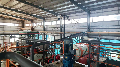
Desen's mobile soil washing plants for this kind of work share a common skeleton: a feed hopper with a grizzly, a trommel or vibrating screen, an attrition scrubber, hydrocyclones, a dewatering screen and a filter press. Everything sits on a trailer or skid so the soil washing equipment can reach the site on a low-bed truck and start producing within days, not months. Throughput on the units used in these jobs ran between 30 and 60 tonnes per hour, with the water loop recirculating through a settling tank so fresh makeup water stays low.
- Attrition scrubbing releases the contaminated coatings rather than crushing the grains
- Hydrocyclones split the fines at the right cut point so clean sand and metal-rich sludge part ways
- A filter press turns the sludge into stackable cake for licensed disposal
- Recycled process water keeps consumption down and the project on budget
Case Study One: Nickel and Copper at a Retired Electroplating Plant
A shuttered electroplating facility in eastern China left workshop floors and open yards contaminated with nickel and copper from years of rinse tanks and spillage. The new owner planned a logistics park on the footprint, which meant the metal-laden soil had to go before piling work could start. Desen Environment brought in a trailer-mounted soil washing train with a scrubber, hydrocyclones and a filter press, and ran it at roughly 45 tonnes per hour.
Nickel and copper concentrated overwhelmingly in the silt and clay fractions, exactly as the feasibility test predicted. After washing, the sand fraction met the site's residential screening levels and went straight back into the excavation as backfill. The metal-rich fines, about twelve percent of the feed volume, left the site as filter cake bound for an authorized hazardous waste facility. The line closed out the remediation window a week early, and the developer's piling contractor moved in on schedule.
Case Study Two: Arsenic in Former Paddy Fields
The second job took place on farmland near an old pesticide blending operation. Surface drainage had carried arsenic across several plots, and the owner needed the topsoil cleaned to agricultural screening standards before planting could resume. Zhengzhou Desen Environmental Technology Co., Ltd. supplied a skid-mounted soil washing circuit sized for steady operation through the off-season.
Arsenic followed the iron oxide coatings into the fine fraction, and the field lab confirmed that the washed sandy soil dropped below the regional threshold. The clean material was spread back across the plots, while the stabilized fines went to landfill as a small, controlled volume. Because the line was modular, it moved to an adjacent parcel the following season without a new procurement cycle. Full equipment specifications for both projects are listed on materialwashing.com.
Frequently Asked Questions
Can soil washing handle arsenic?
Yes, when arsenic is bound to iron oxide coatings on particle surfaces, which is the common case in weathered soils. The scrubber has to be tuned so it liberates the fines without over-grinding, and the cut point is set from a bench-scale test first.
How much of the soil ends up as waste?
On the projects above it was roughly ten to fifteen percent of the feed. The whole point of soil washing is volume reduction: clean sand stays on site, only the concentrated fines leave.
What throughput can these plants reach?
Desen's mobile and skid-mounted soil washing lines typically run 30 to 60 tonnes per hour. Larger campaigns run multiple units in parallel, sharing one water treatment loop.
How quickly can equipment start producing?
Trailer-mounted soil washing units can be on stream within days of arrival. Skid-mounted systems need a short civil works window but still beat a permanent plant by months.
Soil washing case studies prove the method, but every site needs its own feasibility test before the numbers are trusted. Desen Environment runs those tests, builds the equipment, and stays on the ground from first sample to final backfill. Reach out through materialwashing.com or contact Zhengzhou Desen Environmental Technology Co., Ltd. directly to discuss your site's particle size reality.