How Soil Washing Equipment Works: Inside the Treatment Process
A practical walkthrough of the soil washing process: feed preparation, scrubbing, classification, dewatering and water reuse for remediation teams.
How Soil Washing Equipment Works: Inside the Treatment Process
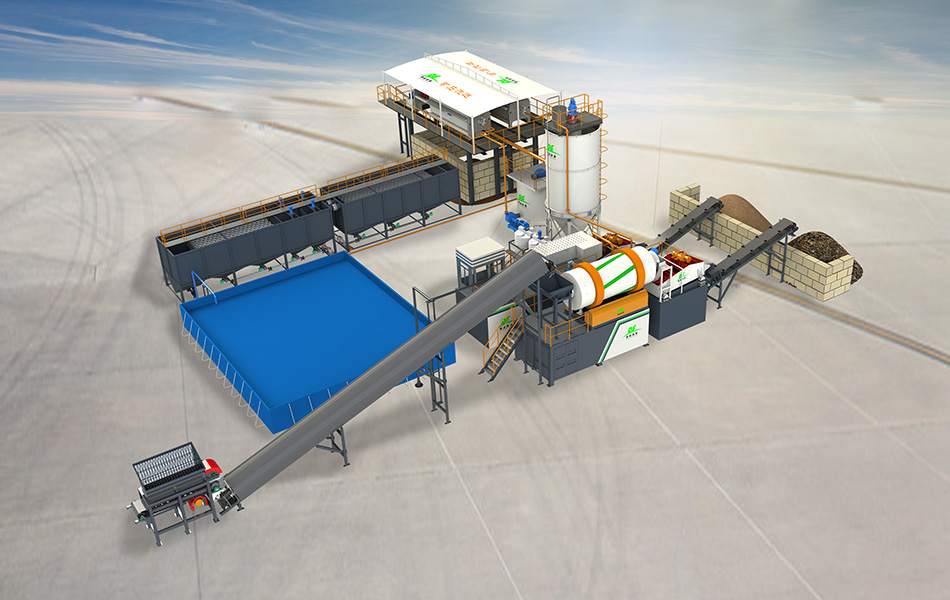
Most people picture soil washing as a giant washing machine for dirt, and the mental image is not far off. The real story is more disciplined. A soil washing plant is a sequence of unit operations, each one stripping away a layer of complexity until clean sand, a concentrated contaminant stream and recycle water come out the other end. Understanding the soil washing process before you buy equipment is the difference between a plant that pays for itself and one that collects dust. Here is what actually happens inside the soil washing line, step by step.
Step One: Feed Preparation and Screening
Contaminated soil arrives with rocks, roots, rebar and whatever else the excavator scooped up. That debris has to leave before anything else, because one piece of scrap metal can wreck a scrubber. A vibrating grizzly or trommel screen takes out the oversize, and a scalping screen splits the feed by particle size. The undersize moves on; the oversize gets rinsed, tested and, if clean, crushed back into the circuit or used as structural fill. This first pass in the soil washing process sets the quality of everything that follows.
Step Two: Scrubbing and Contaminant Release
The heart of the soil washing equipment is the attrition scrubber. Inside a rotating drum or twin-shaft unit, soil grains collide against each other in a dense slurry. That mechanical action strips the contaminated coatings, clay skins and fines off the sand surfaces. No aggressive chemistry is needed at this stage; the goal is simply to liberate the contamination so the next step can separate it. Retention time and solids concentration are tuned from a bench-scale test, because under-scrubbing leaves contamination on the sand and over-scrubbing turns the whole batch into fines.
Step Three: Classification and Fines Management
Once the coatings are loose, the slurry moves to hydrocyclones and dewatering screens in the soil washing circuit. The cyclones spin the material at high velocity, and centrifugal force pushes the heavier clean sand out the bottom while the metal-rich fines exit through the overflow. Adjusting the cut point decides how much of the feed becomes clean product and how much becomes concentrated waste. On a typical job, the fines stream ends up at ten to twenty percent of the original volume, and that is the number that drives the disposal budget.
Step Four: Dewatering and Water Reuse
The clean sand drops onto a dewatering screen and stockpiles as reusable product. The fines slurry goes to a thickener and then a filter press, which squeezes it into stackable cake for licensed disposal. The clarified water loops back to the scrubber and the cyclones in the soil washing plant, so the plant keeps working on a small makeup-water top-up. A well-run line can recycle more than ninety percent of its process water, which matters for both the permit and the monthly bill.
Why the Soil Washing Process Wins on Real Projects
The technical advantages of soil washing equipment show up in the numbers. Clean sand stays on site as backfill instead of being trucked to landfill, the contaminated stream shrinks to a manageable fraction, and the plant itself is modular enough to move when the hot spots do. On a 400-cubic-metre-per-day campaign, that combination routinely cuts disposal costs by half or more compared with dig-and-haul, and the schedule follows the same direction. Desen Environment has built these soil washing lines for heavy metals, hydrocarbons and sludge across multiple countries, with each plant configured from the site's own particle size analysis.
Case in Point: A 40-Tonne-Per-Hour Line in Continuous Service
A former industrial yard treated roughly 400 cubic metres per day on a trailer-mounted soil washing train supplied by Zhengzhou Desen Environmental Technology Co., Ltd. The scrubber, hydrocyclones and filter press ran two shifts for the whole campaign. Field testing showed the washed sand met the cleanup target from the first week, and the fines cake went to hazardous waste in a volume that the client's logistics team called the best surprise of the project. The same trailer later relocated to a second site, which is the kind of flexibility a fixed plant cannot offer.
Frequently Asked Questions
What is the difference between soil washing and soil flushing?
Soil washing is an ex-situ process: soil is excavated, screened, scrubbed and separated in a plant. Soil flushing pumps water or reagents through the ground in place. Washing gives you control and verifiable results; flushing depends heavily on the permeability of the formation.
Does the soil washing process need chemical additives?
For most physical contaminants, no. Attrition scrubbing and particle size separation do the work. Surfactants or pH adjustment are added only when a bench-scale test shows they improve the split.
How much of the soil can be returned to the site?
It depends on the particle size distribution, but 80 to 90 percent is a realistic target on many sites. The clean sand is usually suitable for backfill, and in some cases for reuse as construction aggregate.
How long does it take to commission a plant?
A trailer-mounted line can be producing within days of arrival. Skid-mounted systems take a little longer for civils, but both beat the construction timeline of a permanent facility by months.
The soil washing process rewards preparation. Start with a proper particle size analysis, set a realistic cut point, and the soil washing equipment does the rest. Desen Environment designs and builds the full line, runs the feasibility tests, and supports the project from first sample to final backfill. See the equipment range and reference projects at materialwashing.com, or talk to Zhengzhou Desen Environmental Technology Co., Ltd. about your site.