Mobile Screening Plant: Essential Preprocessing for Soil Remediation Projects
Learn why mobile screening plants are critical for soil remediation preprocessing. Discover how high-efficiency mobile screening improves downstream treatment outcomes and reduces project costs.
The Role of Screening in Soil Remediation
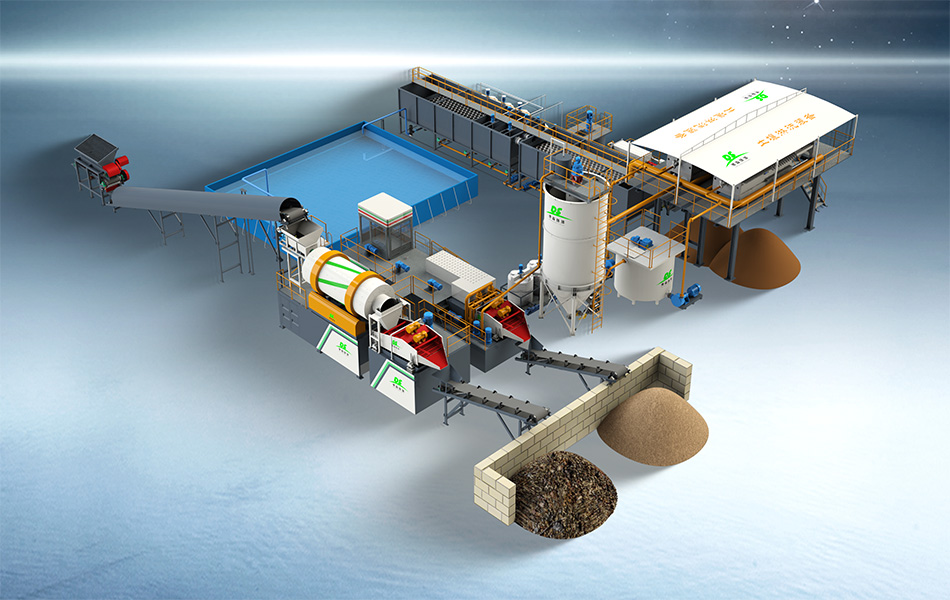
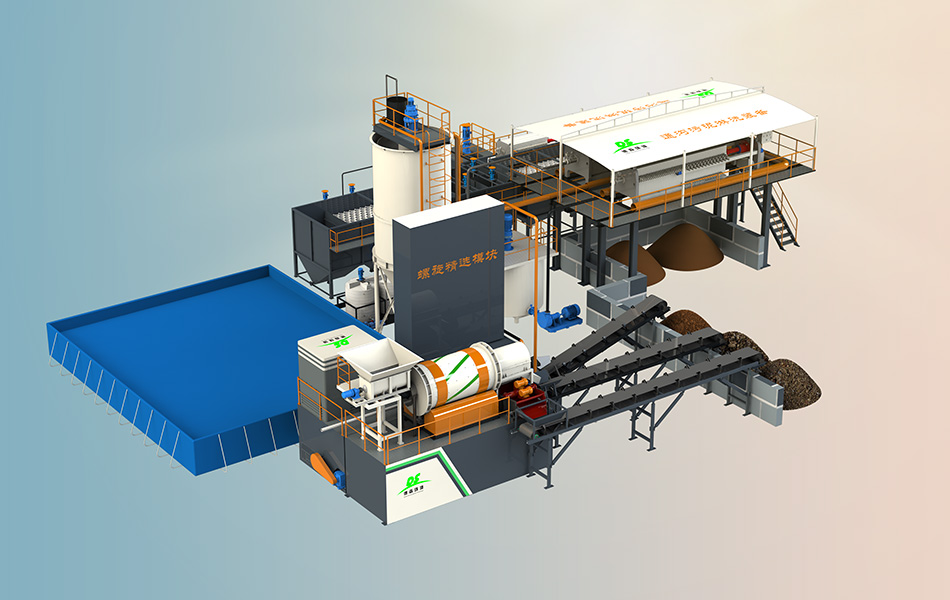
Effective soil remediation begins with proper preprocessing, and mobile screening plants serve as the critical first stage in any contaminated soil treatment workflow. Before soil enters washing, thermal, or biological treatment systems, it must be classified by particle size and freed of debris such as concrete fragments, plastics, wood, and oversized rocks. A well-designed mobile screening plant achieves this through multi-layer vibrating screens that separate material into distinct size fractions, ensuring downstream equipment operates at peak efficiency without blockages or uneven loading.
How Mobile Screening Plants Work
Mobile screening plants are wheel-mounted or tracked units featuring two or three deck screens with customizable mesh sizes. Material is loaded by excavator or wheel loader into a feed hopper, then conveyed to the vibrating screen box. Dual synchronized vibration motors generate linear motion that stratifies and separates material as it travels across inclined screen surfaces. The plant typically produces three graded outputs: oversize material retained on the top deck, mid-size material from the middle deck, and fine material passing through the bottom deck. Screen aperture sizes can be specified from 2 cm to 6 cm and beyond, tailored to specific project requirements.
Key Benefits for Remediation Projects
Mobile screening plants bring several operational advantages to soil remediation sites:
- Improved downstream efficiency: Removing oversized debris prevents clogging of washing scrubbers, hydrocyclones, and filter presses, maintaining consistent throughput in the main treatment line.
- Material homogenization: Uniform particle size distribution entering the treatment system ensures more predictable and consistent contaminant removal, which is particularly important for biological remediation where material uniformity directly affects microbial activity.
- Resource recovery: Clean oversized materials separated during screening can be reused as construction aggregate, backfill, or road base, reducing project waste and disposal costs.
- Rapid site mobility: Wheel-mounted designs with standard trailer towing capability allow one screening unit to serve multiple project sites sequentially, maximizing equipment utilization.
Real-World Applications
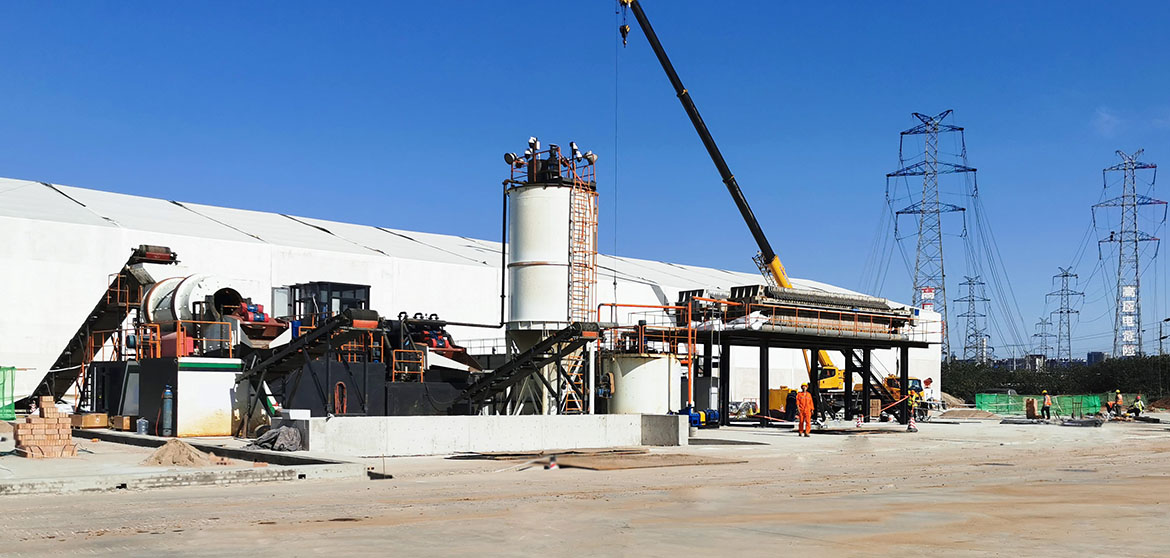
Mobile screening plants have proven their value across diverse remediation scenarios. In a soil bioremediation project in Ningxia, the screening plant handled full-site contaminated soil homogenization pretreatment, precisely removing large debris and producing uniformly graded material critical for stable biological treatment performance. In multiple remediation projects across Chongqing and Nanjing, the screening plant served as the frontline preprocessing unit, effectively preventing oversized materials from causing blockages and load fluctuations in downstream washing equipment. At a Shenzhen landfill mining project, the mobile screening plant achieved efficient separation of plastics, films, stones, sand, and residual soil from aged landfill waste, enabling resource recovery and volume reduction as part of a comprehensive landfill ecological restoration program.
Selecting a Screening Plant for Your Project
When choosing a mobile screening plant for soil remediation, evaluate the maximum feed size (typically up to 150 mm), required throughput capacity (ranging from 60 to 200 tons per hour), screen deck configuration, and transport dimensions. For contaminated soil applications, consider units with sealed screen boxes and dust suppression systems to minimize fugitive emissions during operation. High-wear components such as screen meshes made from high-manganese spring steel and seamless vulcanized rubber conveyor belts ensure durability under abrasive conditions. Advanced models feature hydraulic screen angle adjustment for optimizing separation efficiency across different soil types, and dual-motor self-synchronizing vibration technology delivers stable, low-noise operation suitable for urban remediation sites.