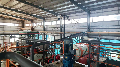
Mine Tailings Washing and Classification: Process Design and Equipment Selection Guide
Mine tailings washing and classification guide: process flow, hydrocyclone classification, dewatering, equipment selection criteria, a 120 t/h case study and FAQs from Desen Environment.
Mine tailings are no longer treated simply as waste. Rising metal prices, tighter environmental regulation of tailings storage facilities, and growing pressure to reduce land occupation have turned mine tailings washing and classification into one of the fastest growing segments of the mineral processing and environmental equipment market. A well-designed tailings washing plant recovers saleable sand and residual metal values, reduces the volume of material sent to the tailings dam, and produces a stable, dewatered filter cake that is far easier to manage.
Desen Environment (Zhengzhou Desen Environment Technology Co., Ltd.) has spent more than two decades engineering washing, screening, classification and dewatering systems for mining, construction aggregate and contaminated-site markets. Through its technical platform materialwashing.com, Desen Environment supplies modular and skid-mounted tailings washing equipment to clients across Asia, Africa, the Middle East and South America. This guide explains how tailings washing and classification works, what technical advantages a modern circuit delivers, how to select equipment, and what results a real project achieved.
Why Mine Tailings Washing and Classification Matters
Historical tailings deposits were generated with recovery technology that is often decades out of date. Grinding was coarser, flotation reagents were less selective, and fine-particle recovery was poor. As a result, many legacy tailings ponds still contain economically meaningful quantities of copper, gold, tin, tungsten, iron, rare earths or high-quality silica sand. At the same time, the liabilities associated with those ponds keep rising: seepage risk, dam stability obligations, dust generation, land occupation and long-term closure costs.
A modern tailings washing and classification circuit addresses both issues simultaneously:
- Value recovery — liberating and concentrating residual minerals, and upgrading the coarse fraction into marketable manufactured sand or aggregate
- Volume reduction — typically 50%–75% of the feed is converted into clean, drained coarse product, leaving only the fine fraction for final disposal
- Water conservation — closed-loop thickening and filtration recycle 85%–95% of process water, a decisive advantage in arid mining regions
- Risk reduction — replacing slurry deposition with dry-stackable filter cake dramatically improves tailings storage facility stability
How a Tailings Washing and Classification Plant Works
The technical principle behind tailings washing is straightforward physical separation. Particles of different size, density and surface characteristics respond differently to shear, hydraulic classification and gravity. A complete Desen Environment tailings washing circuit normally comprises the following stages.
1. Feed Preparation and Pre-Screening
Reclaimed tailings are fed through a vibrating grizzly or trommel to remove oversize material, roots, plastics and reclamation debris. Consistent feed sizing is the single most important factor in stable downstream tailings washing performance.
2. Attrition Scrubbing
High-shear attrition scrubbers rotate opposing impellers at controlled tip speed to break down clay agglomerates and strip surface coatings — iron oxide films, clay slimes, residual reagents — from sand grains. Without effective scrubbing, subsequent classification simply separates dirty lumps rather than clean particles.
3. Hydrocyclone Classification
Multi-stage hydrocyclones perform the core tailings classification duty, making a sharp cut at 75, 45 or even 20 microns depending on the target product. Cyclone underflow reports to dewatering; overflow carries the ultrafine slimes forward to thickening.
4. Dewatering Screens and Spiral Classifiers
Linear-motion dewatering screens with polyurethane panels reduce sand moisture to 12%–15% without thermal drying. Spiral classifiers or fine-material recovery units capture the 75–200 micron fraction that would otherwise be lost to the overflow, improving overall yield by several percentage points.
5. Gravity or Flotation Recovery
Where residual metal values justify it, spirals, shaking tables, centrifugal concentrators or flotation cells are inserted after classification to recover heavy minerals from the washed tailings stream.
6. Thickening, Filter Pressing and Water Recycling
Cyclone overflow is flocculated in a high-rate thickener, then dewatered in a chamber or membrane filter press to a 60%–75% solids filter cake suitable for dry stacking. Clarified water returns to the tailings washing circuit, closing the loop.
Technical Advantages of Desen Environment Tailings Washing Equipment
- Modular and skid-mounted design — each process module ships in a standard container envelope, allowing installation and commissioning in 15–30 days instead of 6–12 months for a conventional stick-built plant
- Redeployable configuration — when a tailings deposit is exhausted, the tailings washing plant is disconnected and relocated rather than demolished
- Wear-optimised components — ceramic-lined cyclones, rubber-lined pumps and replaceable polyurethane screen panels extend service intervals in highly abrasive tailings duty
- Integrated water management — thickener, flocculant dosing and filter press are supplied as one engineered package, avoiding the interface problems typical of multi-vendor procurement
- Automation and remote support — PLC control with density, flow and level instrumentation stabilises the classification cut point; remote diagnostics shorten troubleshooting cycles
- Capacity range — standard configurations from 30 t/h to 300 t/h, with parallel trains for larger reprocessing operations
Equipment Selection: Matching the Circuit to the Tailings
No two tailings deposits behave identically, so selection of tailings washing equipment must begin with characterisation. Desen Environment recommends a structured evaluation covering:
- Particle size distribution — the proportion below 75 microns determines thickener and filter press sizing, usually the largest single cost item
- Clay and slime content — high plasticity indices call for longer attrition residence time and higher scrubbing intensity
- Target products — manufactured sand, backfill material, heavy mineral concentrate, or simply volume reduction
- Water availability and discharge limits — arid or zero-discharge sites justify a larger investment in recycling capacity
- Deposit tonnage and project life — short campaigns favour skid-mounted mobile plants; multi-decade reprocessing may justify a semi-permanent installation
- Site logistics — access roads, power supply, footprint and climate all constrain layout
Bench-scale washability testing on a representative sample, followed by pilot-scale confirmation, remains the most reliable route to a guaranteed process design. Desen Environment provides laboratory test work and flowsheet simulation as part of its pre-engineering service.
Case Study: Legacy Tailings Reprocessing, 120 t/h Modular Plant
A metal mining group operating a closed concentrator in Central Asia faced a 4.2 million tonne legacy tailings pond with dam stability concerns and a regulatory deadline for closure. Sampling showed 0.18% residual copper, 38% silica sand above 150 microns, and 31% material finer than 45 microns.
Desen Environment supplied a 120 t/h modular tailings washing and classification plant comprising a feed hopper and grizzly, twin attrition scrubbing cells, a two-stage hydrocyclone cluster, a dewatering screen, a spiral concentrator bank for copper recovery, a 22 m high-rate thickener and a 1,500 mm membrane filter press.
Results after twelve months of operation:
- 62% of feed tonnage recovered as washed manufactured sand meeting local concrete aggregate specification
- Copper concentrate produced at 18.4% Cu, offsetting roughly 40% of total operating cost
- Filter cake at 68% solids, dry-stacked in a lined cell with an 71% reduction in disposal volume
- Process water recycling rate of 92%, with make-up water limited to filter cake moisture and evaporation
- Plant availability of 91% against a design target of 88%
Frequently Asked Questions About Tailings Washing
Can tailings washing treat both fresh and legacy tailings?
Yes. Fresh tailings arrive as a slurry and can be fed directly to classification, while legacy tailings require reclamation, feed preparation and usually more intensive attrition scrubbing because of consolidation and cementation.
How long does it take to install a modular tailings washing plant?
A skid-mounted Desen Environment plant is typically installed, wet-commissioned and producing on-specification product within 15 to 30 days of arrival on site, assuming foundations and power are prepared in advance.
What moisture content can be achieved without thermal drying?
Dewatering screens deliver 12%–15% moisture on coarse sand, and membrane filter presses achieve 25%–40% moisture on the fine fraction. Thermal drying is only required for specialty product specifications.
Is tailings washing economically viable without metal recovery?
Frequently yes. Where disposal costs, dam construction costs or land values are high, volume reduction and saleable sand production alone can justify the investment, with metal recovery treated as upside.
Can the same equipment be used for contaminated soil remediation?
The core circuit is very similar. Desen Environment builds soil washing plants on the same modular platform, adding chemical dosing and enhanced water treatment where heavy metals or petroleum hydrocarbons are the target contaminants.
Conclusion
Tailings washing and classification converts a long-term environmental liability into a source of saleable product and a dramatically smaller, more stable disposal footprint. The technology is mature, the equipment is modular, and payback periods on well-characterised deposits are frequently measured in months rather than years. The decisive factors are accurate feed characterisation, a correctly sized classification and dewatering circuit, and a supplier able to integrate the whole water loop.
To discuss a tailings washing feasibility assessment, flowsheet design or equipment quotation, visit materialwashing.com or contact Desen Environment (Zhengzhou Desen Environment Technology Co., Ltd.) directly. Preliminary test work and indicative cost modelling are provided at no charge for qualified projects.