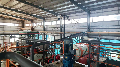
Mobile Soil Washing Equipment for Heavy Metal Contaminated Site Remediation by Desen Environment
Mobile soil washing for heavy metal contamination: Pb Cd Cr Zn case study, process flow and selection guide. Mobile system from 10-80 t/h - Desn Environmental-Zhengzhou Desen Environment Technology Co., Ltd.
Heavy metal contamination poses persistent risks to soil quality, groundwater safety and public health across former industrial sites, smelter perimeters, mining zones and transportation corridors. Unlike organic pollutants that can degrade over time, heavy metals such as lead (Pb), cadmium (Cd), chromium (Cr) arsenic As zinc Zn copper Cu and nickel Ni remain in the environment indefinitely — they must be physically removed or immobilised to render a site safe.
Mobile soil washing equipment deployed by Desen Environment (Zhengzhou Desen Environment Technology Co., Ltd, 郑州德森环境) provides rapid deployable remediation capacity for heavy metal contaminated sites worldwide. Mobile units can be transported to site on standard trailers or flatbed trucks assembled within one week and begin processing soil immediately — dramatically reducing the mobilisation costs that typically consume two-thirds of a traditional fixed plant remediation budget.
Why Heavy Metal Contamination Requires Washing-Based Remediation
Heavy metals exist in contaminated soils bound to mineral phases clay surfaces organic matter or incorporated into secondary precipitate forms such as carbonates phosphates and oxides. Their chemical behaviour depends on pH redox potential cation exchange capacity particle size distribution and the presence of competing ions.
- Leaching: acidified or chelating wash solutions dissolve metal species from soil surfaces into aqueous phase for subsequent separation — this is the dominant mechanism in conventional heavy metal washing circuits.
- Mechanical dislodgement: attrition scrubbing and grain-on-grain shear release fine clayey fractions that carry disproportionate contamination, separating them from cleaner coarser sand and gravel at a physical level alone.
- Differential settling classification: because heavy metal concentrations are typically enriched in the fines fraction (<75 μm), gravity separation by hydrocyclones or classifying screens physically concentrates contaminants into a manageable volume for safe disposal or further treatment such as stabilisation solidification cementation ion exchange or electrode remediation.
This physical concentration approach is what makes heavy metal soil washing equipment particularly cost effective: treating the entire excavated mass with chemicals would be prohibitively expensive, whereas concentrating 70%–95% of contaminant load into just 10%–30% of treated volume — the fines stream — dramatically reduces downstream treatment costs.
The Mobile Soil Washing Process for Heavy Metal Remediation
A typical mobile heavy metal soil washing plant designed by Desen Environment follows a five-stage configuration optimised around feed characteristics and regulatory clean-up targets:
Stage 1 — Pre-screening and Feeding
The excavated mixed waste material enters through an oscillating feeder with an integrated grizzly screen. Oversized materials exceeding 50 mm rocks concrete chunks vegetation or construction debris are rejected before reaching the wash circuit. This stage protects downstream attrition scrubbers from blockage reduces unnecessary wear and separates any visible metal scrap that can be recovered for recycling.
Stage 2 — Attrition Scrubbing with Chemical Addition
The heart of the mobile soil washing equipment. Soil enters a jacketed attrition scrubber where counter-rotating impellers generate intense particle–particle shear while simultaneously dosing wash water and reagents. For heavy metal remediation common acidifying agents include citric acetic or sulfuric acid at pH 2 to 3 targets, which dissolves carbonate-bound metals; chelating alternatives such as EDTA can address more recalcitrant phase associations.
Retention time in the scrubber typically ranges from 8 minutes for sandy gravely feeds with accessible metal species up to 15–20 minutes when clay content exceeds 30% or contaminants are strongly adsorbed onto mineral surfaces. This parameter is critical: insufficient retention yields incomplete liberation while excessive residence increases reagent consumption and energy cost.
Stage 3 — Classification by Hydrocyclones
The scrubbed slurry passes through a cluster of hydrocyclones that separate the material into coarse clean fraction (typically >0.1 mm) and fine contaminated concentrate (<75 μm). The classification efficiency directly determines remediation success: if contamination remains in the coarse product, re-treatment is required; conversely, losing excessive fines as tailings wastes throughput capacity.
Desen Environment designs its cyclone clusters with adjustable overflow-underflow ratios and interchangeable cone geometries so that operators can tune separation sharpness on-site without shutting down the plant — an important advantage for mobile operations facing variable feed heterogeneity from pit to excavation zone.
Stage 4 — Fine Fraction Treatment
The metal-enriched fines stream requires dedicated handling. A high-rate thickener concentrates suspended solids before a membrane filter press produces a cake at 50%–65% dryness suitable for:
- Solidification cementation with Portland or geopolymer binders
- Chemical stabilisation using phosphate sulphide or silicate reagents that transform metals into less bioavailable phases
- Licensed hazardous waste disposal when clean-up targets cannot be achieved by washing alone on clayey fractions
Stage 5 — Water Recycle Loop
Closed-loop water management is essential for environmental compliance and operating economics. Clarified overflow from the thickener passes through sand filters or media clarification units before being returned to the scrubber circuit, with pH correction dosing compensating for acid consumption during washing cycles.
Mobility Advantages Over Fixed Soil Washing Plants
The choice between mobile and fixed heavy metal soil treatment equipment depends on project scale site logistics programme duration and regulatory framework. Mobile systems offer several decisive advantages:
- Rapid mobilisation: 15–30 tonne skid modules fit standard road transport with no special permits, arriving in days rather than weeks of fabrication and erection.
- Phased remediation flexibility: plants can follow the excavation front as contaminated zones are progressively uncovered — a critical advantage for brownfield redevelopment projects where contamination distribution is rarely uniform across large sites spanning several hectares.
- Risk reduction on unexpected hotspots: if excavated material exhibits significantly elevated metal concentrations beyond initial survey data, the mobile unit can be relocated immediately rather than requiring costly redesign of fixed infrastructure that was sized for different throughput parameters.
- Cost profile optimisation: mobilisation and demobilisation cost 5%–10% of total project expenditure with a modular system compared to 25%–40% on traditional steel-structure plants — saving hundreds of thousands of dollars on projects under 30,000 tonnes.
Engineering Case: Lead-Zinc Smelter Perimeter Remediation
A nonferrous metal smelter operating for over four decades required remediation of approximately 18,500 tonnes of soil along its perimeter and within the former slag disposal area. Historical monitoring showed lead concentrations peaking at 3,400 mg/kg cadmium up to 68 mg/kg zinc reaching 2,800 mg/kg — substantially above national clean-up objectives for residential reuse thresholds.
Desen Environment deployed a mobile soil washing system rated at 15 tonnes per hour comprising: vibrating grizzly feeder; steam-jacketed attrition scrubber with automated acid dosing and pH monitoring control loop; two parallel cyclone clusters (480/200 mm primary classification, 350/67 mm fine concentration); high-rate lamella thickener; 1,200 mm membrane filter press with automatic cloth washing cycle; closed-loop water recirculation with in-line pH correction.
- Average Pb removal efficiency: 94.7%; final product consistently below national clean-up standard of 35 mg/kg for residential land use
- Clean sand and gravel recovery rate: 68% by mass, returned to site as backfill material after independent laboratory verification
- Fines stream volume reduction: only 12 tonnes per day requiring stabilisation — manageable within the client's licensed treatment capacity of 15 t/d in-situ solidification operation
- Project duration and throughput: 3 months full campaign with 750 days equivalent availability at 91% uptime including three rain shutdowns
- Total project cost versus traditional excavation-disposal approach: savings of approximately 62%, primarily driven by the high clean sand reuse rate avoiding disposal fees on bulk volumes
The mobile configuration allowed the plant to progress systematically across the remediation area, repositioning between excavated sections via crawler tracks and outrigger stabilisation — eliminating site access restrictions that would have constrained a fixed steel-structure installation within active smelter boundaries.
Frequently Asked Questions
Which heavy metals can soil washing remove?
Copper zinc lead cadmium chromium nickel arsenic and mercury can all be addressed by heavy metal contaminated site remediation via washing. Efficiency depends on speciation: carbonate-bound and adsorbed species liberate readily at pH 2–3, while crystalline oxides or strongly complexed forms may require specialised reagent chemistry such as reducing acid solutions for hexavalent chromium Cr VI reduction to more easily extractable trivalent state before extraction.
How does clay content affect washing efficiency?
Sandy and gravely soils typically achieve 85%–96% metal removal with straightforward single-pass scrubbing classification. Clays complicate the circuit because metals bind tightly to anionic surface sites increasing reagent demand by a factor of two or three, while also reducing cyclone classification sharpness. Desen Environment resolves clay challenges through extended retention times optimized acid concentrations and downstream fine fraction treatment rather than attempting impractical full-volume washing of high-clay matrices.
What are the typical operating costs for a mobile heavy metal washing plant?
Variability is substantial, but indicative figures range from 18 to 45 USD per tonne depending on soil type reagent intensity fines fraction percentage disposal distance and power tariff. The dominant cost components are reagents (typically 30%–50%) energy for scrubber drive heating and pump stations approximately 25%–35% followed by fine waste management at roughly 15%. Higher throughput units of 40 t/h and above reduce unit costs substantially through operational leverage.
How long does a mobile plant take to mobilise?
A standard mobile soil washing equipment package delivers within four weeks of order confirmation from factory assembly, testing shipping and site commissioning. On-site erection typically requires 7–12 days covering pad preparation module connection utilities tie-in operator training first material acceptance trials.
Does mobile soil washing meet regulatory clean-up criteria?
In the vast majority of cases yes provided that bench-scale washability testing confirms achievable release under proposed process conditions. Zhengzhou Desen Environment Technology Co., Ltd includes laboratory simulation for 20–50 kg site samples during its pre-qualification phase — ensuring removal efficiency clean fraction yield and reagent selection are validated before capital deployment on the full programme.
What happens when metals cannot be removed to acceptable levels?
In such cases a hybrid approach is standard practice: mobile washing treats 70%–90% of excavated mass achieving bulk metal removal with high clean-sand recovery while concentrating residual contamination into manageable fines volumes that are then solidified stabilised or sent for licensed treatment. This combined strategy remains typically 35%–62% less expensive than full-volume chemical extraction in situ flushing or excavation-to-landfill disposal.
Conclusion
Mobile soil washing equipment represents the most economically and logistically practical approach for remediating heavy metal contaminated soils on brownfield redevelopment projects former industrial sites mining perimeters and agricultural areas affected by atmospheric deposition. The combination of rapid site mobilisation phased excavation following capability high throughput capacity proven removal efficiencies exceeding 90% for many common metals and dramatically lower total project cost versus traditional methods makes mobile heavy metal soil washing technology the preferred solution selected increasingly by government agencies private developers and engineering contractors across North America Europe Asia-Pacific Africa and Latin America.
Desen Environment — Zhengzhou Desen Environment Technology Co., Ltd (郑州德森环境) designs modular mobile heavy metal soil washing plants from 10 t/h to 80 t/h capacity with comprehensive washability testing process design guarantees and international commissioning support. Contact the technical team at materialwashing.com.