Mine Tailings Washing and Classification
How mine tailings washing and classification recover clean sand and recycle water. Desen Environment supplies modular tailings processing equipment.
Mine Tailings Washing and Classification
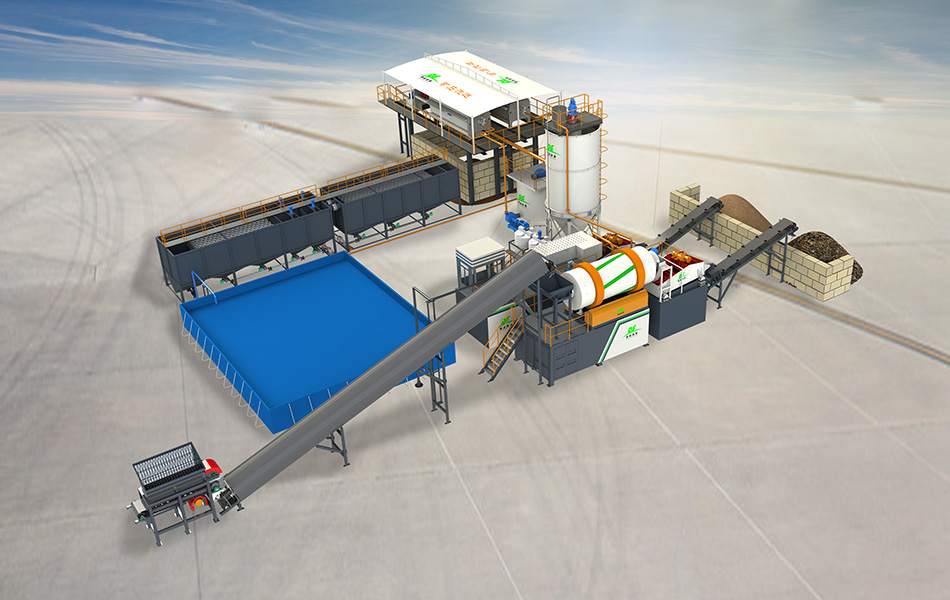
Few waste streams hide as much recoverable value as mine tailings. Decades of downstream processing and coarser recovery methods leave behind fine sands, slags and sludges that still carry saleable minerals and clean aggregate — if they can be separated economically. Mine tailings washing and classification does exactly that: it scrubs the fines loose, splits the material by particle size, and returns a clean sand that can be sold as construction fill while recycling the process water. For mine operators facing tightening discharge rules and shrinking tailings storage capacity, that is not an environmental courtesy — it is the difference between an asset and a growing liability. This guide explains how the process works, where it pays off, and how to scope the right equipment.
Why Tailings Need Washing, Not Just Stockpiling
Run-of-mill tailings are a mix of very different materials: coarse sand grains, fine silt, clay, residual process chemicals and often elevated concentrations of metals such as zinc, lead, copper and arsenic. Left piled, they release dust when dry and contaminated leachate when wet, and every rainy season moves the problem downstream. The engineering insight behind tailings washing is that the contamination and the value are not spread evenly. Most of the surface area — and therefore most of the adsorbed metals and residual reagents — sits on the fine fraction, while the coarse sand is comparatively clean. Separate the two and you shrink the problematic material dramatically, recover the clean fraction, and turn a disposal problem into two manageable streams.
How a Tailings Washing and Classification Line Works
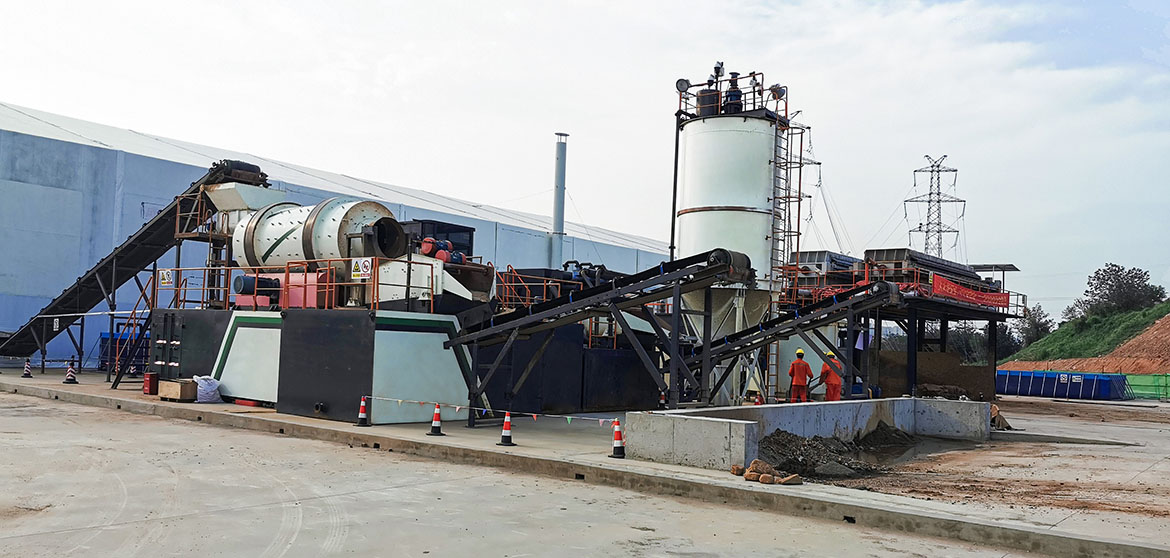
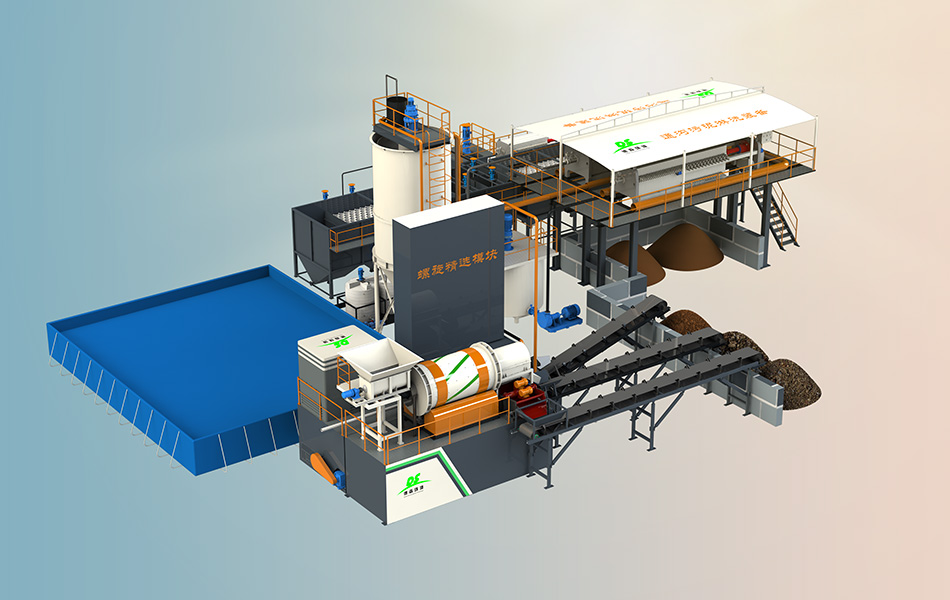
A complete processing train follows a well-established sequence, whether it is built as a fixed plant or as modular skids dropped next to an existing dam:
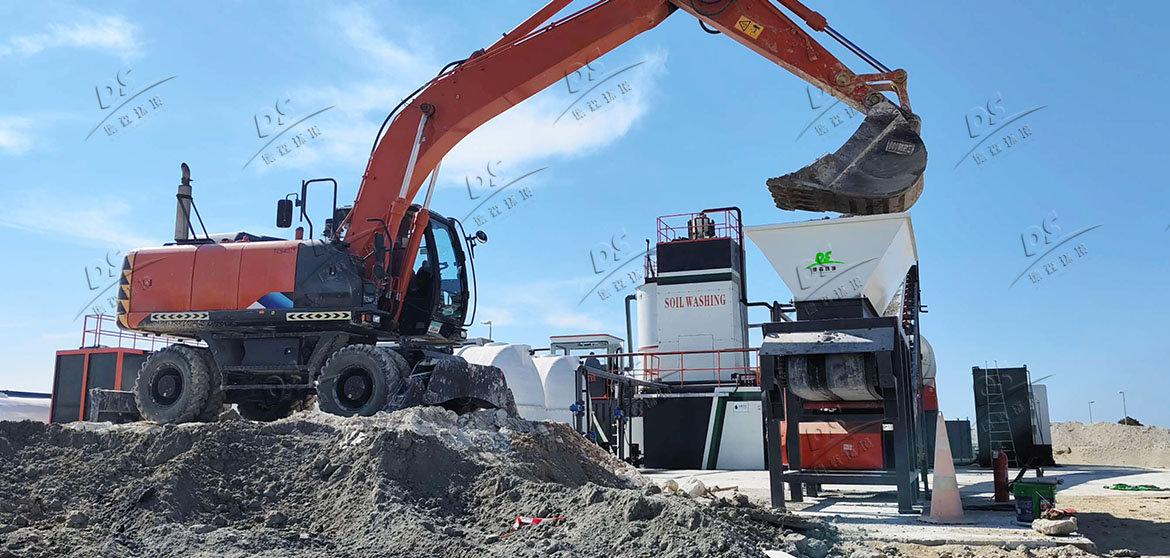
- Prescreening and scrubbing. Oversize rocks and debris are removed, then the feed enters a drum or attrition scrubber where particle-to-particle friction breaks up agglomerates and frees the attached fines and surface coatings.
- Hydrocyclone classification. The slurry is split by particle size and density. Clean coarse sand leaves as underflow; fine, metal-bearing material concentrates in the overflow and can be further thickened.
- Dewatering and drying aids. The fine concentrate is passed through a filter press or centrifuge to produce a low-moisture cake with minimal handling volume, while the clean sand is drained and stacked for reuse.
- Water recycling. All process water is settled, dosed and returned to the line, so delivered fresh water demand stays small and no contaminated water leaves the site unmanaged.
Technical Advantages of Mill Tailings Processing
Volume Reduction
Because the fines typically carry the bulk of the contaminants, concentrating them into a filter cake can reduce the volume sent to specialist disposal by 40–70%. That directly lowers tipping fees, transport cost and the future closure burden of the tailings dam.
Material Recovery and Revenue
The clean coarse fraction often meets specification for road base, backfill or concrete aggregate. Selling it offsets treatment cost, and in some projects the residual mineral-containing fines are reprocessed for flotation or leaching rather than discarded. Mine tailings washing turns a cost centre into a supplementary income line.
Site Safety and Compliance
Removing fine, dust-prone material and managing water in a closed loop improves air quality around the site, simplifies water discharge compliance, and extends the usable life of the tailings storage facility.
Case Study: Treatment of a Lead and Zinc Mine Tailings Pile
Consider a typical mid-sized lead and zinc mine with a tailings stockpile of roughly 300,000 cubic metres. Mineralogical testing showed the coarse sand fraction above 0.075 mm was largely clean, while zinc and lead were strongly concentrated in the fines below that cut. Rather than risk a new storage licence for the whole volume, the operator commissioned a modular tailings washing line rated at 60 t/h. Over the campaign the plant separated approximately two-thirds of the feed as saleable sand, pressed the metal-bearing fines into compact cake for controlled management, and recycled well over 90% of its process water. The headline outcome: a far smaller, better-defined residual stream and a reusable material that paid towards the operating cost. The numbers will differ on every site, which is exactly why bench-scale testing precedes any design decision.
FAQs About Mine Tailings Washing Equipment
Q: What tailings feed conditions are suitable for washing?
A: Washing suits feeds where the coarse fraction is comparatively clean and the contaminants gather on the fines — the situation at most hard-rock mines. Feeds with very high clay content need more scrubbing energy and may respond better to a combined washing and flocculation design.
Q: Can the equipment be moved after a tailings pile is finished?
A: Yes. Modular and skid-mounted washing lines supplied by Desen Environment are designed to be dismantled and redeployed to the next project site, which suits mine operators working through a sequence of deposits.
Q: How is the process water treated before recycling?
A: The water circuit typically combines inclined-tube settling with dosing of PAC, PAM and, where needed, an oxidant. Treated water returns to the scrubber and classification stages, keeping fresh water consumption low and eliminating uncontrolled discharge.
Q: What should be tested before investment?
A: Particle size distribution, contaminant allocation across size fractions, and achievable sand recovery should all be measured on representative samples. Desen Environment can run these tests at its engineering base in Zhengzhou or with a mobile pilot unit on your site.
Conclusion
Mine tailings are not simply a liability that has to be stored — with the right washing and classification line they become two products: a clean, saleable sand and a concentrated, manageable residue. The combination of volume reduction, material recovery and closed-loop water management makes the process increasingly attractive as storage space tightens and regulators raise the bar. Desen Environment (郑州德森环境) designs and builds fixed, modular and mobile tailings washing and classification systems backed by more than a decade of remediation and mineral processing field experience. To discuss your tailings composition and target outputs, contact the engineering team through materialwashing.com.