Skid-Mounted vs Fixed Soil Washing Plant
Compare skid-mounted and fixed soil washing plants. Desen Environment helps you choose the right configuration for budget, site and timeline.
Skid-Mounted vs Fixed Soil Washing Plant
Choosing between a skid-mounted and a fixed soil washing plant usually comes down to one practical question: how long will the contamination stay put? A skid-mounted system can roll out of a factory gate in Zhengzhou and be treating soil on an unrelated site within two weeks. A fixed plant, by contrast, is a statement of intent — you are committing to a location for years. Neither answer is right or wrong, which is exactly why so many remediation teams get the decision wrong. This guide walks through the engineering, cost and scheduling trade-offs so you can pick the configuration that fits your project instead of the one that simply looks impressive in a brochure.
How the Two Configurations Differ in Principle
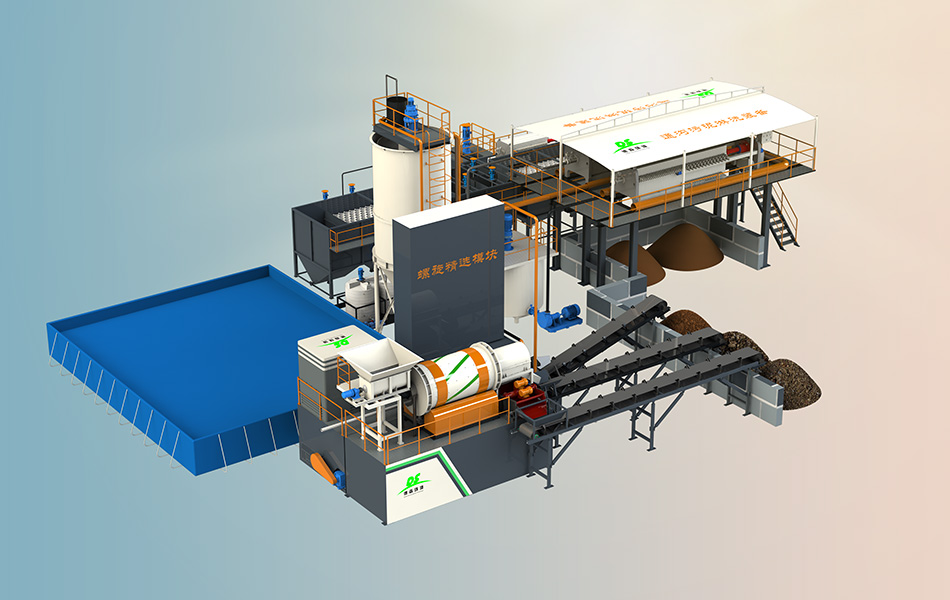
Both approaches run the same core process: prescreening, attrition scrubbing, hydrocyclone classification, dewatering and water recycling. The difference lives in how that process is packaged.
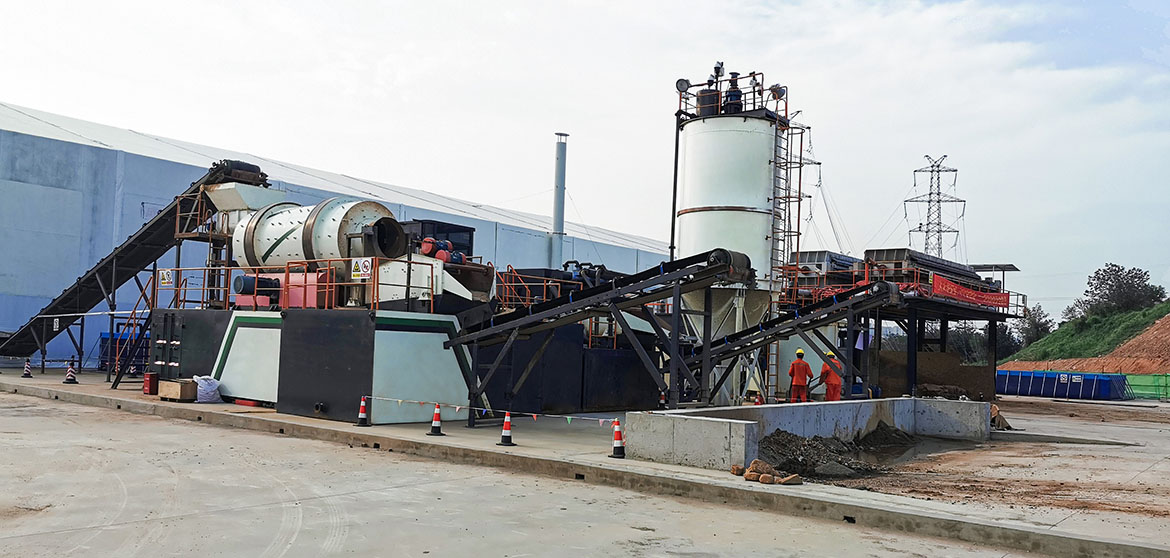
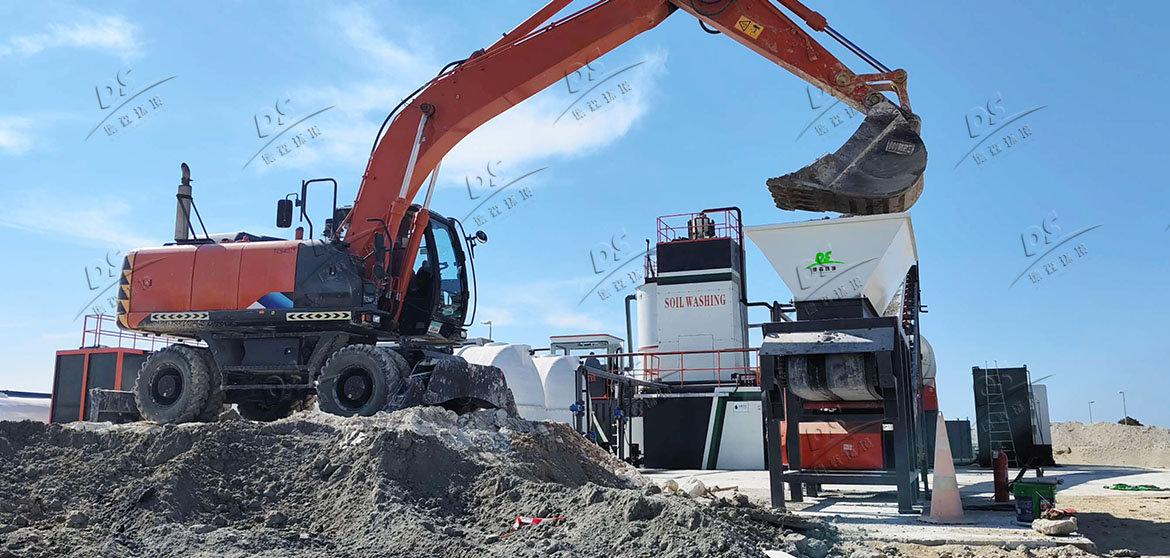
A skid-mounted plant is built as a series of standard modules, each sized to fit on a road-transportable frame. On arrival, the modules are craned into place, bolted together and connected with flexible hoses and cable runs. There is no concrete work beyond a temporary levelled pad, and the whole train can be unbolted and moved again once the job closes out. Desen Environment's modular lines, now in their tenth generation, take roughly seven to fourteen days from first delivery to first feed.
A fixed installation is engineered for the site in advance. Civil works carry the heavy equipment hall, tank pits, dosing rooms and office space; utilities are sized to the final design; and the plant usually runs around the clock for the full lifetime of the remediation program. That permanence buys more than capacity — it buys the freedom to build deep water treatment trains, tall classification towers and large feed hoppers that simply do not travel well.
Technical Advantages on Both Sides
Why Fixed Plants Win at Scale
- Throughput ceiling. Fixed lines are regularly designed for 60–120 t/h and beyond; the largest skid-mounted trains typically top out around 90 t/h, and practical multi-site units sit at 20–60 t/h.
- Integration depth. Water treatment, reagent dosing and sludge disposal can be fully integrated into one permanent facility with buffer storage, which simplifies continuous operation.
- Long-term economics. On programs running beyond two to three years, fixed capital amortises to a lower cost per tonne than repeated mobilization.
Why Skid-Mounted Plants Win on Flexibility
- Mobilization speed. A modular skid train is commissioned in days, not months — decisive for projects under regulatory deadlines.
- Reusability. When one site is finished, the same modules travel to the next, which matters for contractors holding a portfolio of scattered sites.
- Lower permitting friction. Temporary, relocatable plants often qualify under simpler permit regimes than permanent industrial installations.
Case Study: Matching the Configuration to the Job
A former smelter site in Hunan needed 90 t/h for a fixed chromium program running over several years — the scale and duration clearly favoured a permanent line, and Desen Environment delivered it as a fixed plant. On the other side of the equation, a multi-metal remediation in Guangzhou, treating arsenic, mercury, nickel, lead and cadmium, used a mobile and modular washing configuration at 40–60 t/h precisely because the schedule was short enough that a fixed investment would never pay back. The lesson is consistent: let the contaminant volume, the program length and the site's end use decide, not the headline capacity.
Selection Checklist for Your Project
Work through these before you ask for a quote:
- Total contaminated volume and peak daily throughput required.
- Program duration and whether the equipment will redeploy afterwards.
- Availability of power, water and land for foundations at the site.
- Permit environment — will a permanent plant face a materially harder approval path?
- Water treatment and disposal constraints that may favour deeper fixed integration.
Frequently Asked Questions
Q: Can skid-mounted soil washing equipment reach the same removal efficiency as a fixed plant?
A: Yes — the chemistry and separation physics are identical. Removal efficiency is set by scrubbing energy, reagent dosing and classification cut points, all of which the modular train reproduces. The real difference is throughput and integration depth, not cleanliness of the output.
Q: How much more does a fixed plant cost than skid-mounted?
A: Civil works and permanent utilities usually add 30–60% to the cost of a fixed installation compared to an equivalent modular train on a prepared pad. The premium is justified only when the plant will operate long enough to absorb it.
Q: What is the realistic timeline to start treating soil?
A: Skid-mounted and mobile systems commissioned by Desen Environment typically begin first feed within 7–14 days of equipment delivery. A fixed plant commonly needs three to six months of civil construction before commissioning begins.
Q: Does Desen Environment offer pilot testing before final selection?
A: Yes. Bench and pilot scale washing tests can be run at the Zhengzhou engineering facility or with a mobile pilot unit on site. The results feed directly into soil washing equipment sizing, configuration choice and process design — the single best way to de-risk a large investment.
Conclusion
There is no universally better choice between skid-mounted and fixed soil washing equipment — only the right fit for the project in front of you. Fixed plants reward volume and duration; skid-mounted lines reward speed, flexibility and capital discipline. Desen Environment (郑州德森环境) designs, manufactures and delivers both configurations, backed by more than a decade of remediation field experience and hundreds of deployed projects worldwide. For a site-specific comparison, discuss your contamination profile, volumes and schedule with the engineering team at materialwashing.com before committing to a configuration.